The development of IoT in healthcare is transforming hospitals and healthcare centers across the UAE. Connected devices, sensors, and systems now collect and share real-time data with healthcare providers to improve operational and monitoring efficiency, automate processes, and enable smarter, more responsive healthcare environments.
By integrating IoT healthcare solutions into patient care, hospitals enhance comfort, safety, and engagement. IoT healthcare devices create high-quality and patient-centered experiences that improve healthcare services, support patients, and assist medical staff in delivering care. Continue reading this blog to learn all about IoT in healthcare.
Why IoT in Healthcare Is Growing in 2026
IoT adoption in healthcare is accelerating across the UAE, driven by digital transformation initiatives and evolving patient expectations. Healthcare providers are investing in smart technologies to improve efficiency, care quality, and overall patient experience.
UAE Healthcare Digitization
The UAE continues to lead healthcare innovation through strong government initiatives and smart city strategies. Hospitals are adopting connected systems, data-driven platforms, and IoT technologies to enhance operational efficiency, improve care delivery, and support long-term sustainability.
Rising Patient Expectations
Modern patients expect faster response times, personalized environments, and greater control over their healthcare experience. IoT solutions help meet these expectations by enabling real-time monitoring, smart room controls, and seamless communication between patients and healthcare providers.
Growing Demand for Operational Efficiency
Healthcare facilities are under increasing pressure to optimize resources, reduce operational costs, and improve workflow efficiency. IoT technologies help automate routine tasks, streamline hospital operations, and provide real-time insights.
Advancements in Connected Medical Technologies
Rapid innovation in connected medical devices and smart healthcare systems is accelerating IoT adoption. Modern sensors, wearable devices, and integrated platforms enable continuous monitoring and accurate data collection making IoT solutions more reliable and scalable for healthcare environments.
What Is IoT in Healthcare?
The Internet of Things (IoT) in healthcare refers to a network of connected devices, sensors, and systems that collect, communicate, and analyze health and environmental data in real time. These healthcare IoT solutions enable hospitals to monitor patients, automate operations, and improve healthcare services.
IoT in healthcare, often referred to as the Internet of Medical Things (IoMT), enhances patient experience by enabling real-time monitoring, smart hospital room environments, and connected medical devices that support faster response, personalized care, and more comfortable room experiences.
How IoT Works in a Healthcare Environment?
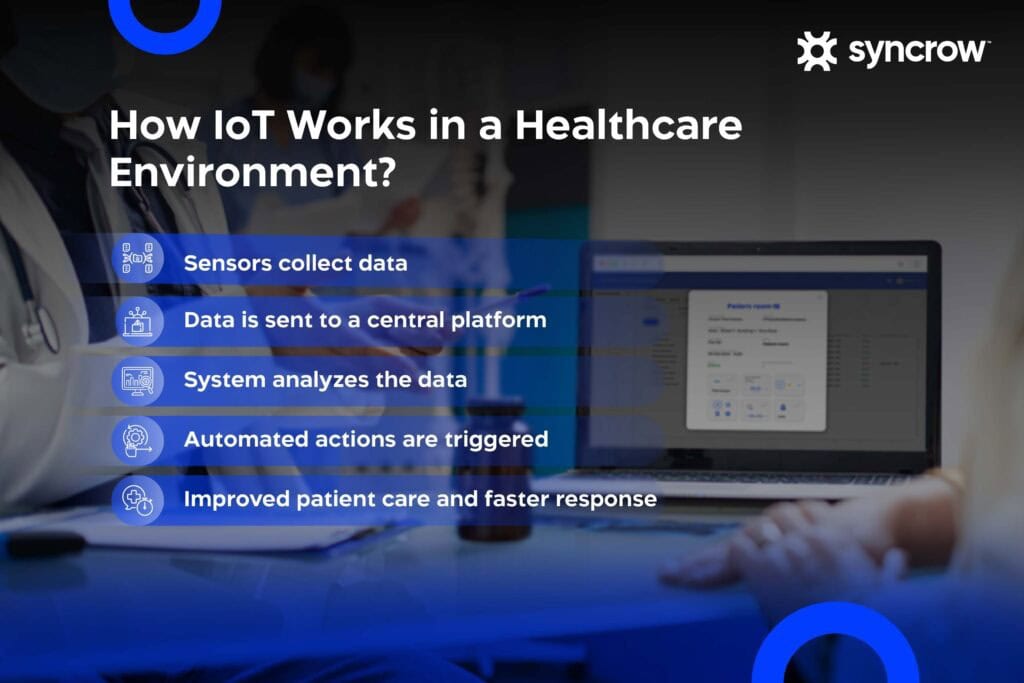
IoT in healthcare works by connecting medical devices, environmental sensors, and hospital systems through secure networks that collect and exchange real-time data to trigger required actions when needed. These devices monitor patient conditions, room environments, and operational systems, allowing healthcare teams to receive instant insights, automate responses, and improve safety and care delivery across hospital facilities.
In healthcare centers, different IoT solutions connect through centralized platforms that integrate sensors, medical devices, room controls, and hospital software, creating a unified environment that supports monitoring, automation, and coordinated patient care with high security levels.
Key IoT Healthcare Solutions in Smart Hospitals
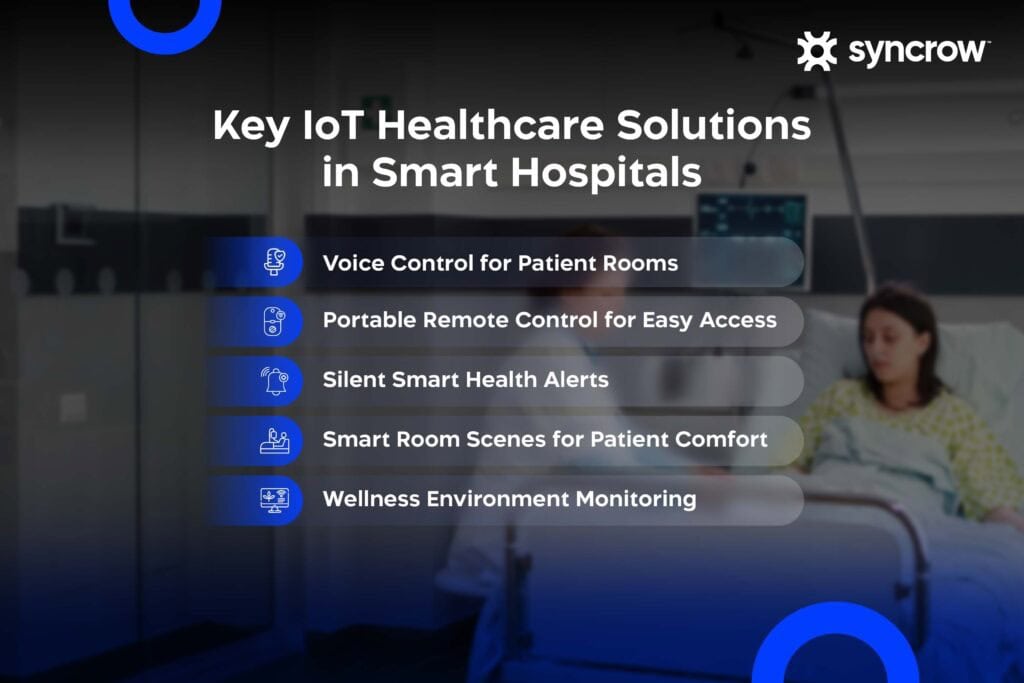
Each application of IoT in health care helps enhance patient health, satisfaction, and safety. These IoT healthcare solutions work together to deliver effective results and maintain consistent quality of work during busy periods. These solutions usually include:
- Voice control for patient rooms.
- Portable remote control for easy access.
- Silent smart health alerts.
- Smart room scenes for patient comfort.
- Wellness environment monitoring.
Voice Control for Patient Rooms
Voice control allows patients to manage lighting, curtains, temperature, and entertainment, and request medical support using simple voice commands. This hands-free interaction improves accessibility, especially for patients with limited movement, creating a more comfortable and convenient hospital stay.
Portable Remote Control for Easy Access
Portable remote controls, especially those with integrated touch screens, allow patients to easily manage a wide range of room features such as lighting, climate, and curtains without leaving their bed. This convenient control supports independence and enhances the overall patient experience.
Silent Smart Health Alerts
Silent smart alerts notify medical staff instantly when patients require assistance or when abnormal conditions are detected. This silent notification system improves response time while maintaining a calm and quiet hospital environment and avoiding possible panic among other hospital residents.
Smart Room Scenes for Patient Comfort
Smart room scenes automatically adjust lighting, ventilation, temperature, and curtains in one command to create a comfortable environment. Hospitals can set predefined scenes, such as rest mode or recovery mode, to support patient wellbeing.
Wellness Environment Monitoring
Wellness monitoring systems use smart building sensors to track air quality, humidity, temperature, and lighting levels. These insights help hospitals maintain healthy indoor environments that support patient recovery and overall wellbeing. IoT wellness monitoring could trigger automated responses to maintain healthy conditions.
Benefits of IoT in Healthcare
IoT in healthcare supports healthcare providers in delivering better services in all conditions and for all patients equally. The benefits of healthcare IoT solutions affect all hospital operations and empower their impact through real-time data and insights. These are the most important benefits of IoMT solutions:
- Remote patient monitoring.
- Operational efficiency.
- Real-time and updated data.
- Controlled access hierarchy.
- Sustainability.
- Stress-free patient experience.
- Easy and effective control.
- Personalized healthcare support.
Remote Patient Monitoring
IoT enables hospitals to monitor patients remotely using connected medical devices and sensors. Healthcare teams receive continuous health data updates with alerts when required, allowing faster responses, better treatment decisions, and improved patient safety.
Operational Efficiency
Connected devices automate routine hospital processes such as monitoring, alerts, and environmental controls. This automation reduces the required time for repeated manual tasks, improves workflow coordination, and allows medical staff to focus more on patient care.
Real-Time and Updated Data
IoT systems continuously collect and update data from medical devices, sensors, and hospital systems for care providers. Real-time insights help healthcare professionals make faster decisions and respond immediately to patient needs.
Controlled Access Hierarchy
IoT platforms allow hospitals to manage access levels for staff, departments, and systems. Controlled access ensures patient safety and keeps all sensitive data and medical equipment secure while enabling authorized teams to work efficiently.
Sustainability
IoT systems help hospitals monitor and optimize energy consumption, lighting, and climate systems. By automating building operations, healthcare facilities can reduce energy waste, lower operational costs, and support sustainable healthcare environments.
Stress-Free Patient Experience
Smart hospital technologies reduce patient stress by creating more comfortable and responsive environments. Automated lighting, climate control, and simplified room management help patients feel more relaxed during their stay.
Easy and Effective Control
IoT solutions allow patients and healthcare staff to control room features through apps, voice commands, or smart panels. This easy interaction improves comfort and simplifies daily hospital routines.
Personalized Healthcare Support
Connected IoT systems allow hospitals to manage and adjust room setups and services based on patient needs. Personalized environments and smart monitoring help improve comfort, support recovery, and deliver more patient-centered healthcare experiences.
ROI of IoT in Healthcare
Investing in IoT healthcare solutions delivers measurable returns for hospitals by improving efficiency, reducing costs, and enhancing patient outcomes. These benefits directly impact both operational performance and overall healthcare experience.
Reduce Operational Costs
IoT systems automate routine processes, reduce manual errors, and enable predictive maintenance, helping hospitals lower operational expenses while improving resource allocation and minimizing unexpected costs across daily healthcare operations.
Reduce Staff Workload
By automating monitoring, alerts, and environmental controls, IoT reduces repetitive tasks for healthcare staff, allowing them to focus more on patient care, improve productivity, and reduce workload pressure during busy periods.
Improve Patient Experience
IoT technologies create personalized and responsive hospital environments through smart room controls, real-time monitoring, and faster support, helping patients feel more comfortable, engaged, and satisfied throughout their healthcare journey.
Optimize Energy Use
IoT solutions monitor and control lighting, temperature, and energy consumption in real time, helping hospitals achieve better energy management, lower utility costs, and support sustainable operations without compromising patient comfort or safety.
Patient Experience in a Smart Hospital: A Real Step-by-Step Example
Smart hospitals use IoT technologies to create a seamless and comfortable patient journey from arrival to discharge. Connected systems automate room preparation, monitor health conditions, and improve communication between patients and medical staff, creating a safer, faster, and more personalized healthcare experience. The main 7 steps in the smart hospital experience are:
- Arrive at the parking.
- Room preparation.
- Room air sanitization.
- Personalized experience and app controls.
- Healthcare support.
- Patient safety.
- Patient discharged.
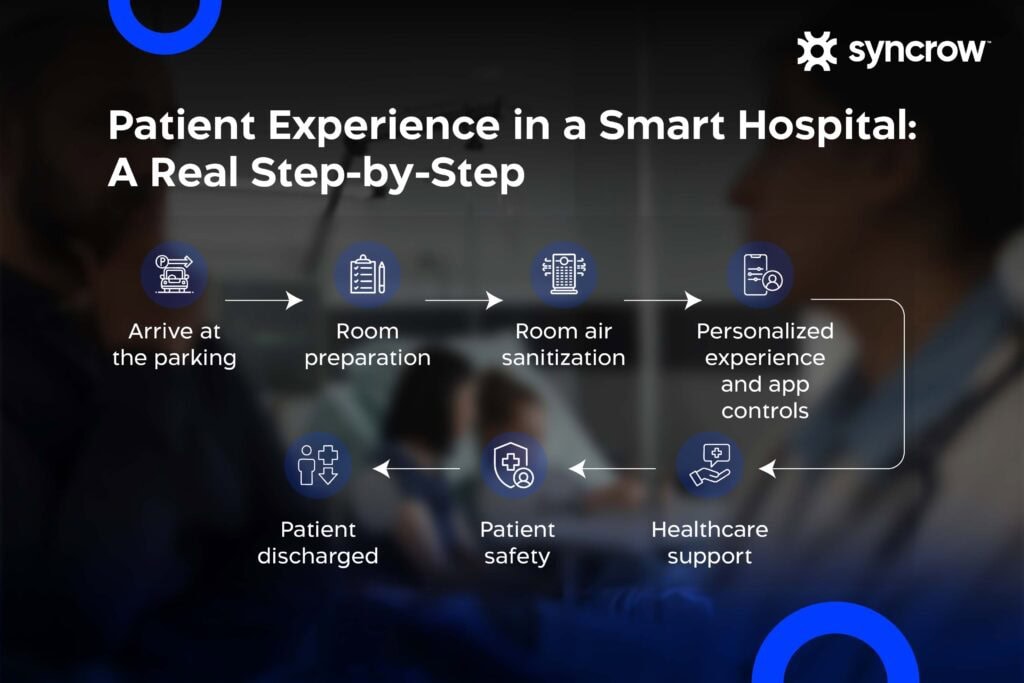
1. Arrive at the Parking
Smart hospital systems can detect patient arrival through parking access or mobile applications. This allows hospital systems to notify staff, prepare the patient’s room, and streamline the admission process. Smart hospital parking can also be integrated with pre-scheduled patient appointments to help ensure access and improve parking availability.
2. Room Preparation
After admission and before the patient reaches the room, smart systems automatically adjust lighting, temperature, and curtains based on patient preferences to create a comfortable environment. This preparation ensures the room is ready for immediate patient use.
3. Room Air Sanitization
Air quality systems monitor and improve indoor conditions by controlling different wellness solutions, such as ventilation, air purification, and humidity levels. This helps maintain a healthier environment that supports each patient’s recovery and overall comfort.
4. Personalized Experience and App Controls
Patients can manage room features such as lighting, temperature, curtains, and entertainment through mobile apps or smart remote controls. This step supports better sterility and lower contamination levels. Personalized control helps patients feel more comfortable and engaged during their stay.
5. Healthcare Support
Connected medical devices continuously monitor patient conditions, send real-time data to healthcare teams, and enable voice communication with the medical team. This allows doctors and nurses to respond quickly and adjust treatments when needed, and helps patients feel more supported during their care journey.
6. Patient Safety
IoT sensors and monitoring systems enhance safety by detecting unusual activity, falls, or emergencies. Instant alerts notify medical staff, helping them respond quickly and reduce potential risks. This is highly important for patients requiring continuous monitoring.
7. Patient Discharged
When patients are discharged, smart hospital systems update records automatically and reset room settings. This allows staff to prepare the room more efficiently and faster for the next patient while maintaining operational efficiency.
Key Challenges of IoT in Healthcare
IoT automation is the future of healthcare, however, there are still some concerns and challenges that healthcare providers should be aware of before adopting these systems. Here are the main challenges to know about:
- Data Privacy and Security: Healthcare IoT systems must protect sensitive patient data and ensure secure communication between connected devices and platforms.
- Old System Update Ability: Relying on legacy systems could create challenges for integration, compatibility, and digital transformation.
- Operational Continuity and Compatibility: IoT solutions must operate continuously and remain compatible with various medical devices and hospital systems.
- Regulatory Compliance: IoT healthcare solutions must comply with strict healthcare regulations to ensure patient safety, privacy, and proper technology use.
IoT vs Human Healthcare: What the Healthcare Future Looks Like in the UAE?
IoT technologies are transforming healthcare in the UAE by automating monitoring, data collection, and standard hospital operations. As smart hospital systems handle routine tasks, healthcare professionals can dedicate more time to personalized care and special cases.
In the future, advanced IoT technology may handle many more standard operational and daily monitoring functions, while direct human interaction will become more specialized. This could make highly personalized and human-centered healthcare a premium offering in advanced healthcare systems.
The Future of Healthcare: Technology and Human Care Working Together
IoT technologies and their connected medical devices, sensors, and hospital systems can effectively support healthcare providers with continuous monitoring of patients and environments. This real-time connectivity helps healthcare teams respond faster and deliver more efficient care.
By automating routine processes and providing real-time insights, IoT in healthcare enhances patient experience through personalized environments, smoother hospital operations, and faster support, creating safer and more comfortable healthcare journeys.
Smart Hospital vs Traditional Hospitals: Key Considerations to Know About
Updating from a traditional hospital to a smart one requires a lot of consideration and planning to make the transformation process seamless and ensure the hospital processes stay accurate, safe, and professional. These are the main comparison factors that make Smart Hospital a valuable upgrade.
| Aspect | Smart Hospital | Traditional Hospital |
| Patient Experience | Personalized | Standardized |
| Monitoring | Real-time sensors | Manual checks |
| Data | Automated analytics | Paper/manual |
| Efficiency | Automated workflows | Staff dependent |
| Maintenance | Predictive | Reactive |
| Cost Management | Optimized operations | Higher inefficiencies |
Smart Healthcare with Syncrow IoT at Medcare Royal Specialty Hospital: Case Study
Syncrow implemented a flexible smart system at Medcare Royal, integrating voice controls, remote room adjustments, and preset modes. Patients could easily manage lighting, temperature, and curtains independently, enhancing comfort and convenience.
The seamless IoT integration improved operational efficiency for staff while giving patients control over their environment. By combining comfort, technology, and simplicity, Syncrow improved the overall patient experience and satisfaction while maintaining daily hospital operations.
Conclusion
IoT in healthcare turns hospitals into smart and connected environments. This improves operational efficiency, patient monitoring, and personalized experiences while ensuring safer, more comfortable, and responsive care throughout the patient journey.
Syncrow’s IoT solutions empower hospitals with integrated IoT services to implement smart systems, including voice controls, room automation, and wellness monitoring, delivering enhanced patient comfort, operational efficiency, and truly connected healthcare experiences. Learn about the best IoT healthcare strategy for your hospital with our free consultation.
FAQs About IoT in Healthcare
What Is Smart Healthcare in IoT?
Smart healthcare in IoT uses connected devices, sensors, and systems to monitor patients, automate hospital operations, and provide real-time insights, improving efficiency, safety, and personalized patient care.
What Is a Smart Hospital?
A smart hospital integrates IoT technologies, automated systems, and connected devices to streamline operations, enhance patient comfort, support clinical decisions, and improve overall healthcare efficiency and safety.
What Are Smart Beds in Hospitals?
Smart beds monitor patient movement, vital signs, and posture, automatically adjusting positions for comfort and safety. They alert staff about patient needs or potential health risks in real time.
Which Device Is an Example of IoT in Healthcare?
Examples include wearable heart monitors, smart beds, environmental sensors, portable remote controls, and connected air purifiers, all sharing real-time data with healthcare teams for monitoring and action.
How Is IoT Used in Healthcare?
IoT is used to monitor patient vitals, track equipment, automate room environments, manage staff workflows, and provide personalized experiences, enhancing safety, efficiency, and overall patient satisfaction.
What Is the Future of IoT in Healthcare?
The future of IoT in healthcare includes fully connected smart hospitals, predictive analytics, remote patient care, personalized treatment, and seamless integration of AI-driven medical devices with healthcare workflows.