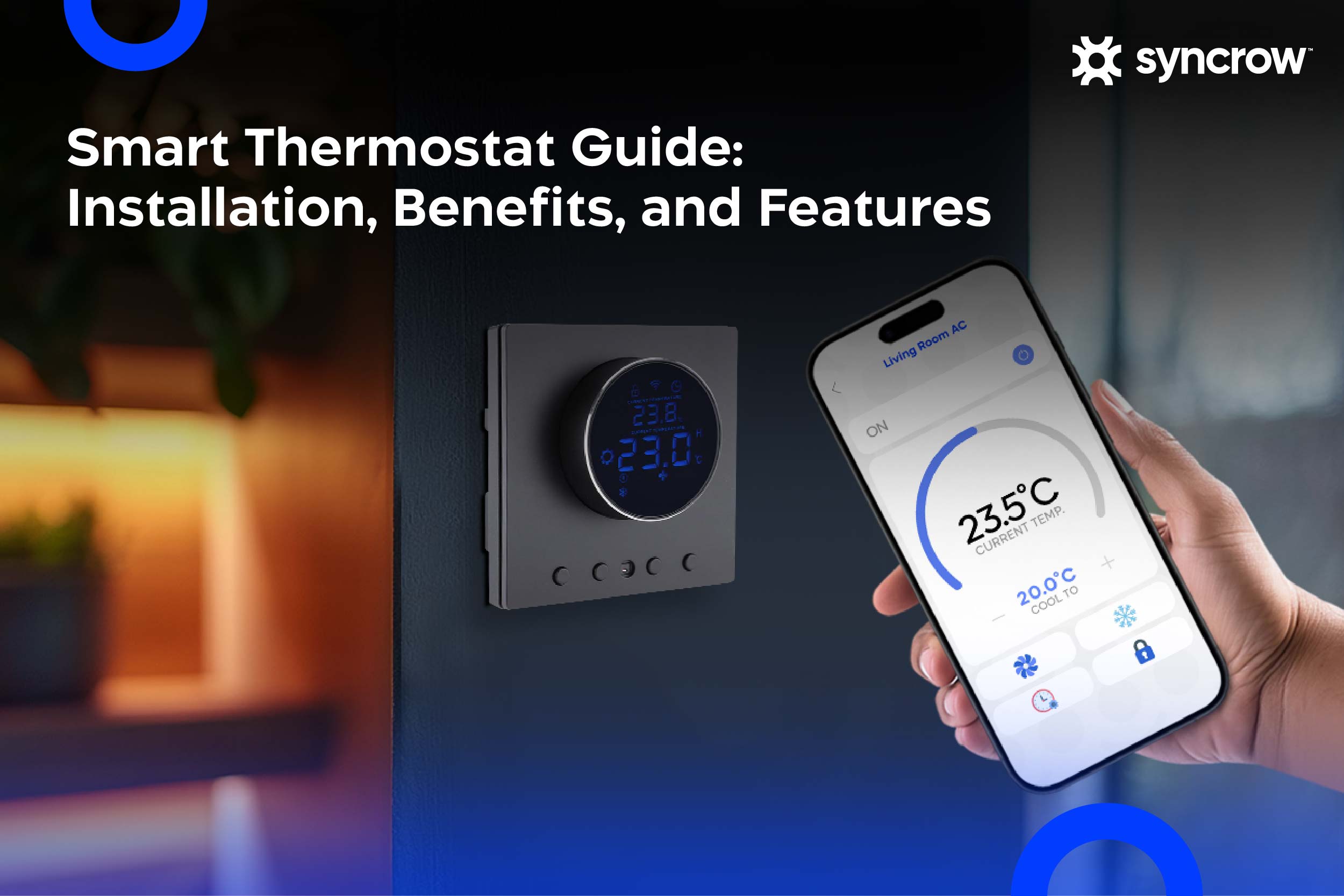
A smart thermostat is a climate control device that enhances comfort and efficiency by controlling and adjusting heating, cooling, and fan settings. But to deliver these benefits effectively, it must be compatible with existing AC systems and capable of integrating with smart home systems.
By adjusting temperature, schedules, and airflow in an automated environment, smart thermostats improve energy efficiency, enhance indoor comfort, and support wellbeing. This guide explains how smart thermostats work, their benefits, installation techniques, and a comparison with a programmable thermostat.
What Is a Smart Thermostat?
A smart thermostat is a connected climate control device that provides full control over heating, cooling, and fan settings of the AC unit. Unlike traditional thermostats, the smart ones connect to home automation protocols like Wi-Fi, allowing remote control through a mobile app, and can enhance indoor comfort while reducing unnecessary energy consumption.
The best smart thermostat normally integrates with a centralized home automation system, enabling coordinated scenes based on your preferences, schedules, and real-time temperature. When connected to a central platform, like a smart home hub, they can interact with sensors and smart curtains to adjust temperature automatically based on occupancy and daily routines.
How Do Smart Thermostats Work?
Smart thermostats offer accurate temperature control based on setpoints, manage fan control for airflow optimization, and allow scheduling to automatically adjust climate settings throughout the day for improved comfort and energy efficiency.
They activate the AC system when cooling is required, either manually or through automation based on predefined preferences and schedules. They can also be controlled through voice command, smart home screens, and smartphone apps.
How to Install a Smart Thermostat?
Installing a smart thermostat may seem possible for homeowners with basic electrical knowledge, especially when replacing an existing unit. However, it is generally not recommended because thermostat installation requires careful verification of AC system compatibility and correct wiring configuration. Incorrect wiring or improper setup can lead to system malfunctions, reduced efficiency, or even damage to the AC unit.
For this reason, installation is best handled by a professional smart home company that can ensure the thermostat integrates properly with the existing cooling system and performs reliably.
Professional installers typically follow a structured process to ensure safe and efficient setup:
- AC System Compatibility Check: The installer verifies the AC type, brand, and wiring configuration to confirm the thermostat is compatible with the system.
- Power Isolation and Safety Preparation: The power supply to the AC system is switched off to prevent electrical hazards during installation.
- Smart Thermostat Wiring and Mounting: The existing thermostat is removed, wiring is identified and connected correctly, and the new thermostat unit is mounted securely.
- System Configuration and Integration: The thermostat is connected to the Wi-Fi network and integrated with the smart home system or automation hub.
- Testing and Calibration: The installer tests cooling, fan operation, and scheduling to ensure the thermostat controls the AC system accurately and efficiently.
Benefits of Smart Thermostats
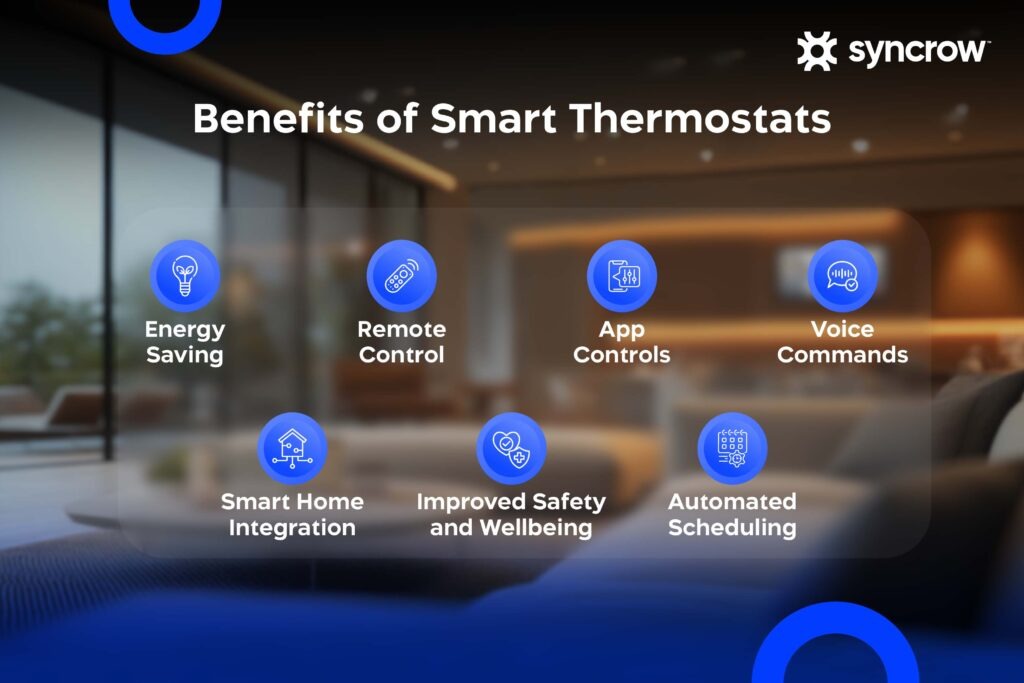
A smart air conditioner thermostat improves indoor comfort, energy management, and wellbeing, especially when integrated into a centralized automation system that enables automation, scenes, and scheduling.
Smart Thermostat Benefits at a Glance
- Reduces unnecessary AC runtime and improves energy efficiency.
- Enables remote temperature control from anywhere through a mobile app.
- Maintains a stable indoor climate for better comfort and wellbeing.
- Integrates with sensors, smart curtains, and home automation systems.
- Provides full control over cooling, heating, and fan speed.
- Automates temperature schedules based on routines and occupancy.
- Offers convenient app-based monitoring and management.
- Supports hands-free control through voice assistants.
- Helps reduce electricity consumption and lower monthly DEWA bills.
Energy Saving
Smart thermostats share real-time data on temperature levels, allowing residents to make informed decisions about cooling settings. This reduces unnecessary AC runtime, optimizes cooling cycles, and prevents overuse, allowing better energy management.
Remote Access and Control
With remote access and control, you can adjust temperature settings from anywhere through the mobile app. This flexibility improves convenience and efficiency by allowing adjustments based on changing plans, activating the AC before arrival, or turning systems off remotely.
Improved Safety and Wellbeing
A smart thermostat maintains consistent indoor temperatures, preventing overheating or excessive cooling that can affect comfort and health. Stable climate control supports better air quality monitors, protects sensitive equipment, and creates a safer indoor environment for families, employees, or tenants.
In addition, physical control on the smart thermostat can be disabled to maintain a stable home environment without unwanted adjustments by guests or children.
Seamless Smart Home Integration
Seamless smart home integration allows the smart thermostat to work alongside sensors, smart curtains, and automation scenes. By coordinating climate settings with occupancy detection and daily routines, the climate control system improves efficiency while delivering a responsive and luxurious living experience.
Automated Scheduling and Scenes
This benefit is directly related to system integration, enabling automated scheduling and temperature optimization based on predefined routines. This automation ensures better comfort during active hours while reducing energy consumption during unoccupied periods without manual intervention.
Convenient App-Based Controls
Smart thermostat app control provides real-time visibility into temperature settings and system status. Users can adjust setpoints, review usage data, and receive the necessary notifications through a mobile application, making climate control more accessible and easier to manage.
Hands-Free Voice Commands
Hands-free voice control enhances comfort by enabling seamless temperature adjustments without physical interaction. Through compatible voice assistants, users can change cooling or heating settings instantly, adding convenience while supporting a more connected smart home environment.
Lower Electricity Bills
Smart thermostats adjust cooling schedules and temperature levels to reduce unnecessary AC operation while maintaining a comfortable indoor environment. This improved efficiency lowers electricity consumption and helps residents manage high energy usage during hot seasons, leading to noticeable reductions in monthly electricity costs and DEWA bills.
Where Smart Thermostats Work Best?
Smart thermostats are climate control devices that suit various AC systems and residential environments. Their ability to adjust temperature and integrate with the entire smart home system makes them especially valuable in spaces where comfort, efficiency, and centralized control are priorities.
Here are the spaces where smart thermostat can give the most impact:
- Apartments
- Villas
- Offices
- Short-term rental properties
Programmable Thermostat vs. Smart Thermostat: Which Is Best for UAE Homes?
It is essential to consider the specifications and features of each option when deciding between a programmable thermostat and a smart thermostat to get the best comfort and efficiency levels. Below is a features comparison between the two types to help you make an informed decision:
| Feature / Factor | Programmable Thermostat | Smart Thermostat |
| Automation & Integration | No automation | Advanced automation, integrates with smart home systems, sensors, and scenes |
| Control Level | Manual or preset temperature adjustments | Full control over cooling, heating, and fan speed, adaptive adjustments |
| Scheduling | Fixed schedules with limited flexibility | Dynamic scheduling based on routines and occupancy |
| Stability | Stable | Stable |
| Works Without Internet | Yes | Yes (except remote control) |
| Energy Saving | Based on manual controls | Smart energy saving modes available with data to optimize usage |
| Remote Access | Not available | Full remote access via app |
Conclusion
A smart thermostat offers energy savings, automated management, and improved comfort while integrating with broader smart home systems. Its benefits include accurate climate management, scheduling, remote control, and better safety.
At Syncrow, a smart home company based in Dubai, we deliver end-to-end smart climate control solutions and smart thermostat installation that is compatible with over 90% of AC brands. Our smart thermostats integrate seamlessly with sensors, smart curtains, and home automation systems, providing reliable, efficient, and fully connected climate management for modern homes. Learn more about Syncrow solutions by booking a free consultation.
FAQs About Smart Thermostat
What Does a Smart Thermostat Actually Do?
A smart thermostat is a home climate device that provides full control over indoor temperature using smart technology like Wi-Fi, app controls, voice commands, and more. It can follow schedules, activate when you enter or leave the home, integrate with other smart home devices, and improve comfort.
Is It Worth Getting a Smart Thermostat?
Yes, smart thermostats save energy, provide convenient remote control, and enhance home comfort. They offer long-term cost savings, support smart home integration, and deliver advanced climate control, making them a valuable investment.
Is a Thermostat Better Than AC?
A thermostat complements the AC by providing precise temperature control, scheduling, and energy optimization. It does not replace the AC but ensures the system operates efficiently, improving comfort, reducing energy waste, and extending the lifespan of the cooling unit.
What Happens to a Smart Thermostat If Wi-Fi Goes Down?
Most smart thermostats provide basic temperature control and scheduling, even if Wi-Fi is lost. However, remote control, app access, and integration with other smart devices may be temporarily unavailable until Wi-Fi is restored.
Do Smart Thermostats Work with All AC Systems?
Professionally developed smart thermostats are compatible with 90% of AC systems in the UAE, including the one offered by Syncrow IoT Solutions. This also relies on proper installation and verification to ensure the thermostat integrates appropriately with central AC systems.