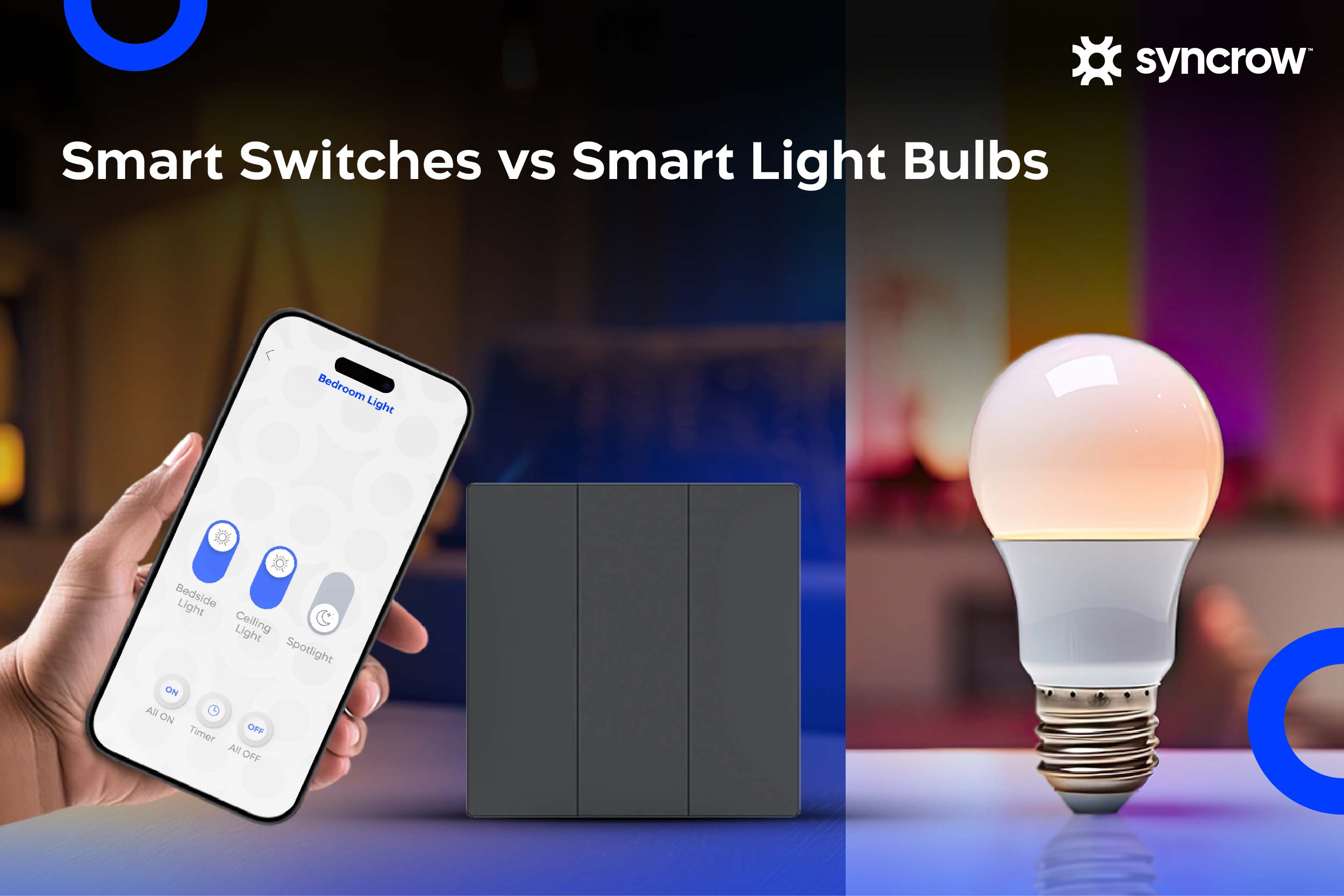
Smart lighting plays an important role in comfort, energy efficiency, and automation. As smart home adoption continues to grow, many residents compare smart light bulbs vs smart switches to determine the most suitable solution for their space. While smart light bulbs offer individual control of brightness and color for each fixture, smart switches control entire lighting circuits from the wall, providing stronger stability and better scalability for larger properties.
Understanding these differences is essential before investing. By comparing smart switches and smart bulbs in terms of functionality, cost efficiency, stability, and integration, property owners can decide which approach is the best for their lifestyle and future smart home plans. Continue reading this blog to find all the answers you are searching for and choose the best smart lighting solution.
What Are Smart Light Bulbs?
Smart light bulbs are LED bulbs that connect to Wi-Fi, Bluetooth, or Zigbee networks to enable remote and automated lighting control. They offer quick upgrades without the need for rewiring. Unlike traditional bulbs, these connected lights can be managed through a mobile app or voice assistant. Users can turn lights on or off, adjust brightness, change colors, and set schedules without using a wall switch. The best smart light bulbs support motion sensors and automation features such as scenes, timers, and more.
How Do Smart Light Bulbs Work?
Smart light bulbs work by connecting to a home network using a wireless technology. Once a smart light bulb is paired with a mobile app or smart home lighting system, it receives digital commands to adjust brightness, color, scheduling, and automation remotely or through voice commands. Because smart bulbs’ functions are fairly limited, setting them up in your home is usually straightforward and doesn’t always require professional expertise.
Pros and Cons of Smart Light Bulbs
Smart light bulbs offer a fast upgrade, flexibility, and convenience, but there are some limitations that you need to consider before upgrading.
Pros of Smart Light Bulbs
Easy Installation
A smart light bulb can simply replace an existing light bulb without rewiring, making it ideal for quick upgrades in apartments, especially for rented properties.
Color and Brightness Control
Many smart bulb models offer smart features, such as adjusting brightness and changing colors to create different moods and scenes.
App and Voice Control
You can control lights remotely through mobile apps or voice assistants for added convenience and comfort.
Cons of Smart Light Bulbs
Dependence on Wall Switch Position
If the wall switch is turned off, the smart bulb loses its power source and cannot be controlled remotely.
Higher Cost for Multiple Fixtures
Upgrading your entire home requires replacing every bulb individually with a smart bulb, which can become expensive.
Limited Scalability for Large Homes
Managing multiple bulbs separately can reduce overall system stability, limit unified control, and make automation more complex across the home.
What Are Smart Switches?
Smart light switches are wall-mounted smart home devices that replace traditional switches to provide connected and automated lighting control. These switches connect through Wi-Fi, Zigbee, or similar protocols to enable app, voice, and scene-based automation. Instead of upgrading each bulb individually, they control the entire lighting system from a single centralized point.
Smart switches allow users to turn lights on or off, adjust the lighting, schedule operation, and activate scenes while keeping manual switch functionality. Smart light switches are usually part of full smart home systems.
How Do Smart Switches Work?
A smart light switch works by replacing a traditional wall switch and connecting to a home network through Wi-Fi or Zigbee. It controls the electrical circuit directly, allowing lights to be operated manually, through a mobile app, automated schedules, or voice commands. Unlike smart bulbs, smart switches provide continuous power to fixtures, supporting more stable automation and scheduling.
Key Differences Between Smart Light Bulbs and Smart Switches
Choosing between smart light bulbs and smart switches requires evaluating more than convenience. Installation complexity, long-term scalability, system stability, and return on investment all influence performance. Below is a table of comparison between smart light bulbs and smart switches.
| Criteria | Smart Light Bulbs | Smart Switches |
| Installation | Simple plug-and-play replacement with no wiring changes | Professional installation is typically required |
| Control | Limited controls, and manual switch cuts power | Controls entire lighting circuit. Maintains both manual and smart control simultaneously |
| Compatibility | Works with some voice assistants and apps | Integrates with broader smart home systems, sensors, scenes, and voice assistants |
| ROI | Cost-effective for a few fixtures. Expensive when scaling across full property | Higher upfront cost, but more economical for multi-room or whole-home control |
| Stability | Large numbers of bulbs can strain the network | High stability even when controlling the entire home lighting |
| Maintenance | Each bulb may need individual replacement or reconnection | Standard bulbs can be used, reducing replacement frequency and management effort |
| Customization | Strong color and mood customization at fixture level | Scene-based customization across multiple lights and rooms. |
| Best For | Single rooms | Villas, apartments, new builds, or integrated smart home systems |
| Professional Tip | Ideal for limited upgrades or decorative lighting | For long-term performance and centralized automation, circuit-level control offers stronger reliability and easier system expansion |
Pros and Cons of Smart Light Switches
Smart light switches offer centralized control and long-term reliability, making them a strong foundation for scalable smart homes.
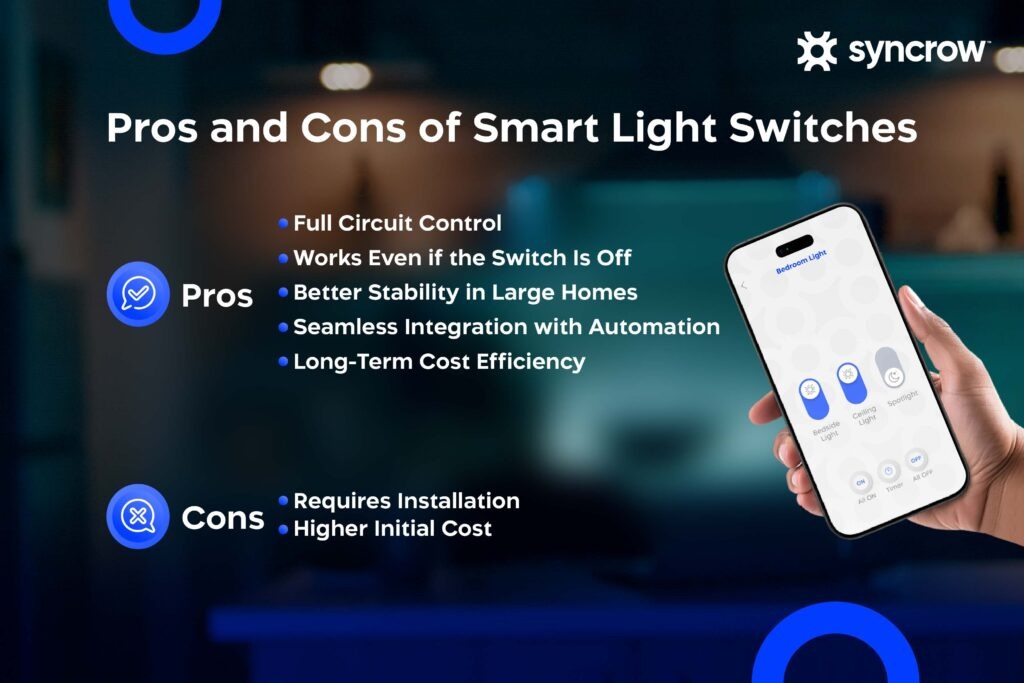
Pros of Smart Light Switches
Full Circuit Control
A single smart light switch controls an entire lighting circuit, reducing the need to upgrade every bulb individually. Smart light switches integrate entirely with the smart home system, allowing better compatibility, control, and comfort.
Works Even if the Switch Is Off
Unlike smart bulbs, with smart light switches, power is never cut off from the lighting system, ensuring consistent remote and automation control. This feature keeps the automation and scheduling working effectively even when the lights are turned off.
Better Stability in Large Homes
Because automation operates at the circuit level rather than per bulb, network congestion is reduced, improving overall system performance and stability.
Seamless Integration with Automation
Whether with sensors, AC, smart curtains, thermostats, or scenes, smart light switches can integrate seamlessly, allowing complete home automation.
Long-Term Cost Efficiency
For homes with many fixtures, installing smart light switches is more efficient and cost-effective than replacing multiple bulbs.
Cons of Smart Light Switches
Requires Installation
Since smart light switches replace existing wall switches, they require professional installation, especially if a neutral wire is needed.
Higher Initial Cost
The upfront investment in smart light switches is typically higher than buying a few smart bulbs. However, for large homes and villas, smart switches are more cost-effective than smart light bulbs.
Should You Use a Smart Bulb or a Smart Switch?
The appropriate solution depends on property size, budget, lighting goals, and long-term automation plans. Smart bulbs are suitable for single rooms, rentals, or quick upgrades. Smart switches, on the other hand, are better for home automation, centralized control, and integrated systems where stability and scalability are priorities.
Can Smart Light Switches and Smart Light Bulbs Work Together?
Yes, smart light switches and smart light bulbs can work together when installed professionally and integrated within the same smart home system. A smart switch can control power to a circuit to keep automation features and scenes activation, while smart bulbs provide advanced features like color changing and dimming.
Smart Light Bulbs vs Smart Switches for Villas in UAE & KSA: Which Is Better?
For villas in the UAE and Saudi Arabia, using smart bulbs offers quick installation and individual control, making them ideal for simple upgrades or decorative lighting. However, managing multiple bulbs across large rooms can be complex and less reliable, especially when upgrading the entire home.
Smart light switches deliver greater reliability and seamless connectivity with scenes, sensors, and full home automation platforms. Circuit-based management improves energy saving, reduces unnecessary consumption, and supports a more comfortable and refined living experience.
Smart Bulbs vs Smart Switches for Apartments in UAE & Saudi Arabia: Which One to Choose?
Smart light switches provide a professional and long-term lighting solution for apartments in the UAE and KSA. They enable central control of all lighting circuits, integrate seamlessly with a complete smart home system, and support automation, scenes, and energy-saving schedules. With smart switches, you can reduce electricity consumption, simplify daily routines, and support a more efficient and connected lifestyle.
On the other hand, smart bulbs are considered easy to update with app and voice control for individual lights. They could work for renters or smaller spaces, providing limited features without the need for professional installation.
Conclusion
The right choice depends on property size, automation objectives, and long-term expansion plans. Smart bulbs suit small upgrades and rentals, while smart light switches deliver better control, scalability, and stronger system stability for larger homes and integrated smart environments.
Syncrow’s end-to-end smart lighting solutions provide a professional foundation for smart living through reliable switches, sensors, and central control platforms. As a smart home automation company operating in Dubai and Riyadh, Syncrow supports scalable automation, energy efficiency, and seamless integration within a unified smart home system. Learn more about the best end-to-end smart solutions by booking a free site assessment.
FAQs About Smart Light Bulbs vs Smart Switches
Do I Need a Smart Switch If I Have a Smart Bulb?
Even if a smart bulb is installed, a smart light switch can improve reliability and control. Smart light switches avoid power cuts from manual switching, support central automation, and enhance system stability. For larger spaces or long-term smart home plans, they provide stronger performance and better scalability.
Can You Put a Smart Bulb in Any Light?
Smart bulbs can be installed in most standard light fixtures as long as the base type and voltage match the fixture requirements. However, enclosed fixtures, dimmer switches, or incompatible voltage systems may affect performance, lifespan, or connectivity if not properly matched.
What Are the Disadvantages of Smart Bulbs?
Smart bulbs typically cost more than traditional bulbs and require a stable Wi-Fi or hub connection for efficient functionality. They can also lose smart features if powered off at the wall switch and may have compatibility limitations with certain fixtures or dimmers.
Can We Use a Smart Bulb Without Wi-Fi?
Some smart light bulbs could function as traditional bulbs without Wi-Fi, allowing manual on and off control through a standard switch. However, smart features such as app control, scheduling, automation, and voice commands usually require an internet connection or a compatible hub.
Can a Smart Switch Control a Smart Bulb?
Yes, a smart switch can control a smart bulb, but compatibility depends on the system setup, and having a professional configuration within a unified smart platform is necessary to maintain consistent automation and control.
What Is a Smart Light Bulb?
A smart light bulb is an LED lighting device that connects to a wireless network or hub to allow remote control, scheduling, dimming, and color adjustments. It integrates with mobile apps, voice assistants to improve lighting flexibility.
Are Smart Light Bulbs Energy Efficient?
Smart light bulbs are energy efficient because they use LED technology, which needs less electricity than traditional bulbs. Additional features such as scheduling, dimming, and automation support energy efficiency by reducing unnecessary energy usage.
How To Reset a Smart Light Bulb?
Resetting a smart light bulb usually involves turning the bulb on and off in a specific sequence, often several times in quick sequences, until the smart bulb flashes to indicate reset mode. Keep in mind that the exact process differs based on the manufacturer and that you should follow the product’s official instructions.