Energy consumption in modern UAE and KSA buildings is rising at an unprecedented pace. From residential to commercial, they depend on complex infrastructure to power HVAC systems, lighting, elevators, and other systems. As buildings become smarter and more connected, their energy demand grows – and so does the urgency to deploy an IoT-enabled smart energy management system.
Research from MDPI indicates that IoT technology may decrease energy consumption by as much as 30%. This figure and many others are already influencing how developers, facility managers, and property owners approach smart building automation. Keep reading to learn about smart energy management systems, their core components, and the many benefits they offer.
What Is a Smart Energy Management System?
A smart energy management system is a digital, IoT-enabled solution that monitors, analyzes, and optimizes energy usage across a building in real time. It is a centralized platform that connects energy assets, such as lighting, HVAC systems, EV charging units, solar panels, and battery storage, to provide real-time data, automation, and intelligent optimization.
The system usually includes an IoT platform and a wide array of sensors and other smart devices that connect together to form one energy-saving ecosystem. The number of devices and their types largely depend on the building and the purpose of monitoring energy consumption.
Traditional vs. Smart Energy Management System: Key Differences
Traditional energy management systems were built for monitoring and reporting. They collected data from meters and provided monthly or weekly consumption summaries. While useful, they lacked automation, integration capabilities, and predictive analytics.
In contrast, smart energy management systems operate in real time. They integrate with IoT devices, sensors, EV charging infrastructure, renewable energy systems, and even microgrids to optimize energy usage dynamically.
Features Comparison between Traditional and Smart Energy Management Systems
Systems as complicated as energy management require a deeper understanding to realize how they differ from one another. Here’s a features table with the main differences between these systems:
| Feature | Traditional Energy Management System | Smart Energy Management System |
| Data Collection | Periodic reporting | Real-time monitoring |
| Control Capability | Limited or manual | Automated control with cloud technology |
| Integration | Standalone systems | Seamless integration with IoT devices |
| Renewable Energy | Minimal support | Integrates solar energy, PV, battery storage |
| EV Charging | Limited support | Manages EV charging and electric vehicle loads |
| Sustainability Reporting | Manual, limited reports | Detailed, automated reporting |
| Outage Detection | Delayed | Instant alerts and response |
| Scalability | Limited | Cloud-based and scalable |
Core Components of a Smart Building Smart Energy Management System
Smart Energy Management Platform
At the heart of any smart energy management system is a cloud-based energy management software. It acts as the command center for all connected energy systems within the building.
It is IoT compatible and designed to integrate with lighting systems, HVAC, EV charging stations, solar energy installations, battery storage units, and other on-site energy resources. Through seamless integration, it provides facility managers with real-time data and actionable insights.
In the UAE and KSA, this capability is particularly important. With growing adoption of solar energy, microgrids, and large-scale developments, buildings need platforms that can optimize energy distribution across multiple energy assets. A centralized platform helps ensure compliance with sustainability reporting requirements while maintaining cost control.
Smart Energy Clamp and Smart Meters
A smart energy clamp is installed on electrical circuits to measure real-time power consumption. It provides detailed insights into energy usage at the circuit level.
This allows building operators to identify inefficiencies, monitor peak hours, detect abnormal loads, and reduce electricity waste. In facilities with EV charging sites, clamps help manage the additional load caused by electric vehicle charging to prevent grid overload or outage scenarios.
Smart Switches and Automated Lighting Control
Lighting represents a significant portion of energy demand in commercial buildings. Smart light switches allow centralized and automated control over lighting systems.
By integrating occupancy sensors and scheduling automation, buildings can optimize lighting usage based on actual needs. During peak hours, lighting loads can be reduced automatically to optimize energy performance and reduce costs.
Smart IoT Devices
Smart IoT devices form the distributed intelligence layer of the system. These include smart thermostats, HVAC controllers, smart plugs, and intelligent meters.
They collect real-time data and communicate with the central energy management system. Through automation and optimization, they adjust energy systems dynamically to ensure maximum energy efficiency without compromising occupant comfort.
Smart IoT Sensors for Real-Time Monitoring
Smart IoT sensors are critical for accurate energy optimization. Common sensors include:
- Occupancy sensors
- People counting sensors
- Humidity sensors
- Motion sensors
- Light level sensors
- Temperature sensors
Each sensor provides valuable data that allows the system to optimize energy usage precisely. For example, occupancy sensors reduce energy waste in unused rooms, while temperature sensors help optimize HVAC performance.
Benefits of Smart Energy Management Systems for UAE & KSA Buildings
Reduce Cost Saving
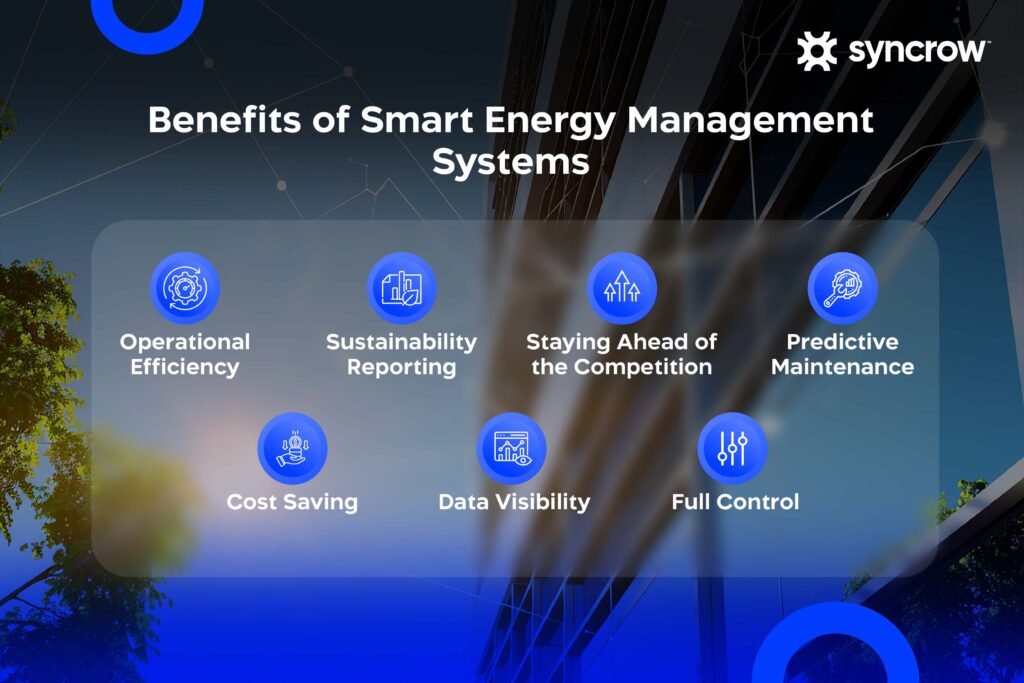
A smart energy management system helps reduce costs by identifying inefficiencies and automatically adjusting loads. By shifting energy usage away from peak hours, businesses can reduce energy costs significantly.
In the UAE and KSA, where large commercial properties consume substantial electricity, especially for cooling, even a small percentage reduction translates into major financial savings.
Improve Operational Efficiency Through Real-Time Automation
Research from MDPI indicates that IoT technology may decrease operating expenses by 20%. Through automation, predictive maintenance, and real-time monitoring, facilities can optimize operations while reducing manual intervention.
The system can detect unusual patterns, prevent equipment failure, and ensure smooth building operations without disruptions.
Remote Monitoring and Multi-Site Energy Control
A cloud-based smart building energy management system provides remote access to all energy assets. Facility managers can monitor performance, adjust settings, and manage energy systems from anywhere. This level of control is especially valuable for multi-site portfolios and distributed developments.
Real-Time Energy Data and Advanced Analytics
With real-time data dashboards, decision-makers gain full visibility into energy usage patterns. This transparency allows companies to optimize long-term energy strategies and ensure better planning for power generation and storage.
Sustainability and ESG Reporting
As the UAE pushes for more accurate ESG reporting, modern businesses must align with the government’s evolving sustainability regulations. Smart energy management systems simplify sustainability reporting by providing accurate consumption data and tracking carbon reduction efforts.
They also integrate renewable energy sources like solar energy and battery storage to support clean energy initiatives.
Increase Property Value and Tenant Attractiveness
Buildings equipped with advanced energy management systems are more attractive to investors and tenants. For instance, as EV adoption grows across the region, integrating EV charging infrastructure and managing electric vehicle loads efficiently becomes a competitive differentiator.
In addition, modern residents, including millennials and Gen Z, are becoming increasingly interested in living in a sustainable home, and a smart energy system can provide that.
Integration with Smart Building and Smart Home Automation Systems
A modern energy management system in residential buildings goes beyond monitoring shared utilities. It acts as the foundation for smart home automation, allowing developers to integrate intelligent features across every apartment.
Through a centralized, cloud-based platform, property managers can oversee building-wide energy systems while residents control their own lighting, HVAC, smart switches, and connected IoT devices. This creates a balance between centralized optimization and occupant comfort.
Enable Predictive Maintenance and Proactive Risk Prevention
One of the strongest advantages of IoT-driven energy management systems is enabling predictive maintenance. By continuously analyzing real-time data from sensors, smart clamps, and connected devices, the system can detect abnormal load patterns before they become critical issues. Instead of reacting to equipment failure, facility teams receive early alerts that allow them to take preventive action.
This approach significantly reduces downtime, prevents unexpected system failures, and protects critical infrastructure. In high-demand environments across the UAE and KSA, where many building systems operate simultaneously, predictive analytics can also help prevent grid overload and minimize the risk of outage.
Conclusion
With rising energy demand, regulatory pressure, and sustainability commitments in the UAE and KSA, adopting a smart energy management system is becoming a necessity. By leveraging IoT technology, buildings can reduce energy consumption, improve operational efficiency, and future-proof their infrastructure.
At Syncrow, we provide advanced smart building energy management system solutions designed for the GCC market. Our cloud-based platform integrates seamlessly with IoT devices and smart sensors to optimize energy performance across residential, commercial, hospitality, and other sectors.
With a strong focus on innovation and regional requirements, we enable businesses to manage energy intelligently while achieving measurable cost and sustainability outcomes. Book a free energy optimization assessment to explore the possibilities of IoT automation in your building.
FAQs About Smart Energy Management Systems
What is a smart energy management system?
A smart energy management system is an IoT-enabled platform that monitors and controls building energy usage in real time. It helps optimize performance, reduce costs, and improve efficiency through automation and data analytics.
What exactly is an EMS system?
An energy management system (EMS) is a framework that tracks, analyzes, and manages energy consumption within a facility. Advanced EMS platforms integrate with devices and renewable systems to optimize overall performance.
What are the key components of a Smart Energy Management System?
Key components of smart energy management include:
- Central energy management software platform
- Smart meters or clamps
- IoT devices
- Smart IoT sensors
- Smart switches
- Integration capabilities with renewable energy sources and EV charging systems
Can Energy Management Systems (EMS) integrate with renewable energy?
Yes. Modern EMS platforms can integrate solar energy, PV panels, battery storage, and even microgrids to optimize energy distribution and reduce reliance on traditional grid supply.
How is IoT used in the energy sector?
IoT is used to collect real-time data from sensors and devices, enabling automation, predictive maintenance, and optimization of energy systems. This improves efficiency, reduces costs, and supports sustainability initiatives.