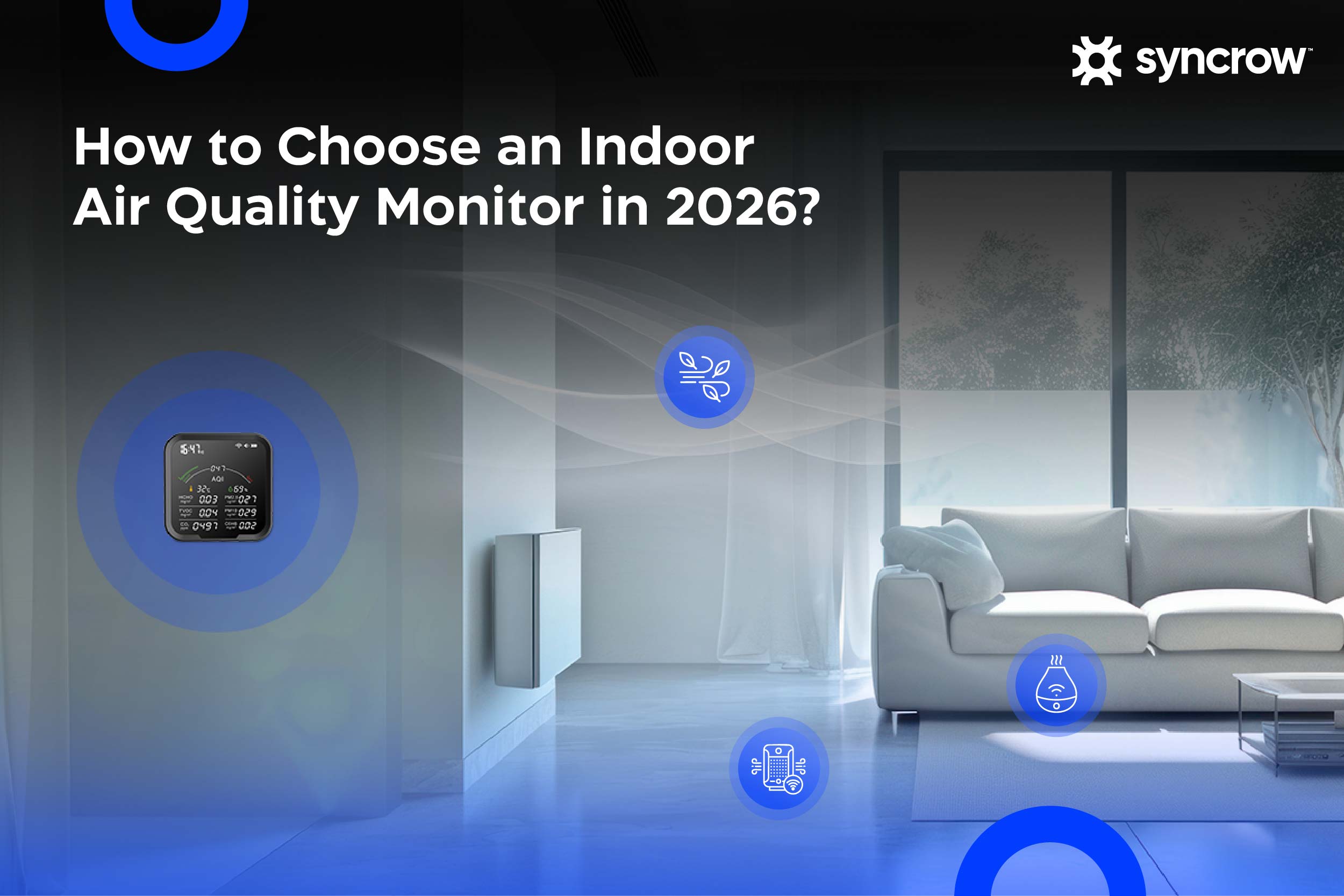
In regions like the UAE and KSA, where people spend most of their time indoors in climate-controlled environments, poor ventilation, high air pollution levels, and humidity imbalances can lead to many unwanted symptoms. Considering an indoor air quality monitor is therefore essential for maintaining healthier living spaces.
These devices detect air pollutants and environmental changes, providing accurate insights into the air your family breathes daily. When integrated with a smart home system, they enable timely action and support safer indoor environments throughout the year.
In this blog, we dive deep into the indoor air quality monitor, how it works, what it measures, key features, and the benefits of the indoor air quality monitor.
What Is an Indoor Air Quality Monitor?
An indoor air quality monitor is a device that measures pollutants and environmental conditions inside a home. It detects things like carbon dioxide (CO₂), particulate matter (PM2.5 and PM10), volatile organic compounds (VOCs), temperature, and humidity, all while providing real-time insights for residents.
These devices help identify air quality changes that may affect health, comfort, and productivity. Indoor air quality sensors support informed decisions about ventilation, filtration, and climate control.
Indoor air quality sensors are used to understand what occupants are breathing daily. Since residents in the UAE and KSA spend most of their time indoors in air-conditioned spaces, indoor air monitoring becomes increasingly important. These devices do not improve air conditions directly. However, when connected to smart home automation systems, they can trigger automated responses that help maintain balanced and healthier indoor environments.
How to Monitor Indoor Air Quality?
Monitoring indoor environments helps maintain healthy conditions across different seasons and occupancy levels. Reliable measurements provide the data needed to support actions such as improved ventilation, enhanced filtration, or humidity adjustment.
Use an Indoor Air Quality Monitor
The most effective way to monitor indoor air quality is by using a dedicated indoor air quality sensor. These devices measure pollutants, temperature, and humidity in real time. Smart air quality sensors, in particular, provide accurate data specific to your home conditions.
Place the Indoor Air Quality Sensor strategically
Proper placement of monitors significantly affects air quality measurement accuracy. Indoor Ars should be installed away from direct airflow and in frequently occupied areas such as living rooms, bedrooms, or home offices.
Connect It to the Smart Home System
Professionally integrating an indoor air quality monitor with a smart home system enhances its effectiveness. When connected, monitors can trigger automated responses such as adjusting ventilation, activating smart air purifiers, or starting a smart humidifier. This allows indoor air conditions to be managed proactively rather than reactively.
What Do Indoor Air Quality Monitors Check For?
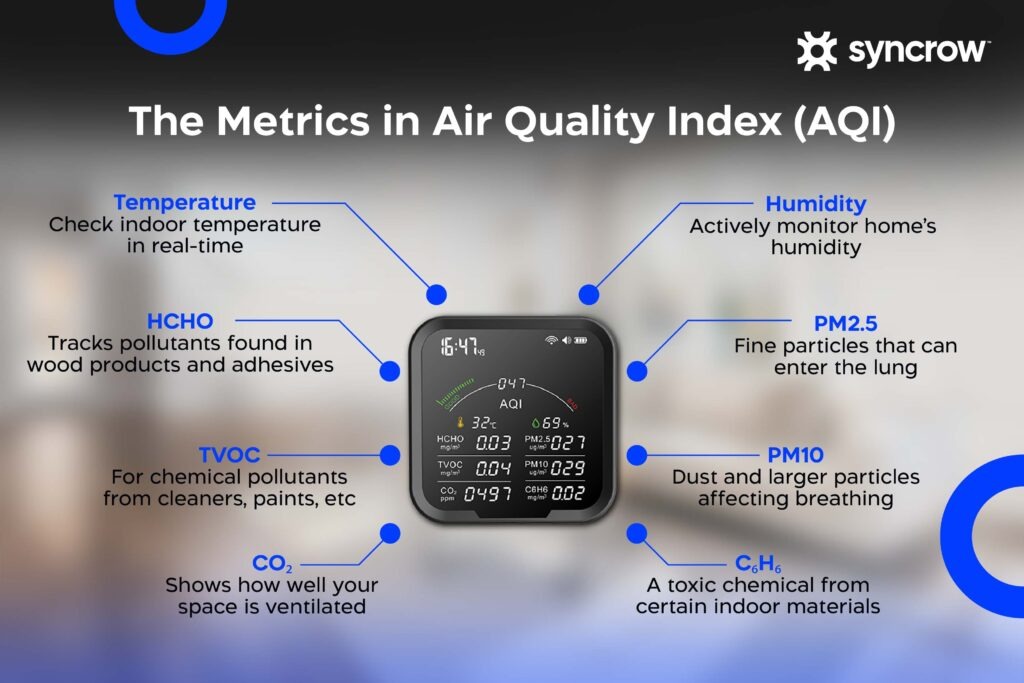
Indoor air quality monitors measure different particles in the air to evaluate indoor conditions. The air quality readings may vary depending on the device model and sensor configuration. You need to choose the best monitor based on the measures that you need. Below are the main metrics found in an air quality index (AQI):
Carbon Dioxide (CO₂)
Carbon Dioxide (CO₂) is a gas produced through breathing and combustion processes. Indoor CO₂ levels could rise due to poor ventilation and overcrowding, and can cause headaches, fatigue, and reduced concentration. Monitoring CO₂ helps maintain suitable airflow and supports mental performance and overall comfort.
Formaldehyde (HCHO)
Formaldehyde (HCHO) is a colorless gas commonly released from furniture, flooring, adhesives, and building materials. Long-term exposure to it may cause eye irritation, respiratory discomfort, and other health concerns. Measuring formaldehyde levels helps discover hidden indoor pollution sources and reduces potential long-term health risks.
Total Volatile Organic Compounds (TVOC)
Total Volatile Organic Compounds (TVOC) represent a group of airborne chemicals emitted from paints, cleaning products, furnishings, and air fresheners. High TVOC levels may cause dizziness, allergies, or irritation. Monitoring TVOC helps notice chemical buildup and supports healthier indoor air management strategies.
Benzene (C₆H₆)
Benzene (C₆H₆) is a volatile organic compound found in tobacco smoke, fuel emissions, and certain household products. Even low-level exposure over time may cause health risks. Measuring benzene helps identify pollution sources early, enables faster response, and supports safer indoor environmental conditions.
Particulate Matter (PM2.5 and PM10)
Particulate Matter (PM2.5 and PM10) refers to tiny airborne particles that can enter the respiratory system. They come from cooking, burning incense, cleaning activities, vacuuming, or HVAC systems with poor filtration. PM2.5 particles are small enough to penetrate deep into the lungs, while PM10 affects the upper airways. Monitoring particulate matter reduces respiratory risks and improves indoor comfort.
Temperature
Indoor temperature directly influences comfort, sleep quality, productivity, and energy consumption. In the UAE and KSA, excessive cooling or uneven temperature distribution can strain HVAC systems and increase costs. Monitoring temperature ensures thermal balance, prevents discomfort, and supports efficient climate control throughout occupied spaces. When integrated with a smart home system, the indoor air quality monitor can adjust the AC to maintain a stable and comfortable indoor temperature.
Humidity
Humidity significantly affects respiratory health, indoor air stability, and pollutant concentration levels. High humidity promotes mold growth, dust mites, and bacterial spread, while low humidity can cause dry airways and irritation. Monitoring humidity and activating the smart humidifier, when needed, helps maintain an ideal moisture balance and protects both occupants and interiors.
Key Features of Home Air Quality Monitors
Indoor air quality monitors for the home come with different features based on the advancement of the monitor. Modern indoor air quality monitors have smart connectivity and a display to be integrated professionally into a smart home system and trigger the needed action.
Display
A well-designed display shows monitored metrics clearly to understand indoor air conditions at a glance. Color indicators, real-time readings, and trend visuals make complex data easier to read. Having a good screen ensures that changes in air quality are quickly recognized and addressed among residents.
Smart Connectivity
Smart connectivity is an essential feature in modern air quality monitors. It enables the monitor to sync with mobile applications or smart home systems. This gives you remote access to real-time data and notifications, and improves your family safety and home security even when you are away. Connected smart home devices support better monitoring across multiple rooms and make long-term air quality management more efficient.
Portability
Portable indoor air quality monitors offer the needed flexibility for testing different rooms and environments. Compact designs allow users to evaluate bedrooms, living areas, or offices as needed. Mobility helps identify pollution sources accurately and ensures air conditions are well-adjusted throughout the entire space.
Alerts
Alert systems are a vital safety feature of indoor air quality monitors. This means the device will notify users when air quality levels exceed recommended limits via the device itself, mobile app, or connected smart system. Timely alerts allow quick action, helping prevent long exposure to pollutants or unhealthy indoor conditions.
Data Insights
Accurate air quality data is essential for a reliable evaluation. Advanced indoor air quality monitors provide precise readings of pollutants and environmental factors, reducing false alarms or misleading results. Consistent accuracy leads to better decisions regarding ventilation, filtration, and overall indoor environmental management and maintenance.
Benefits of an Indoor Air Quality Monitor
Indoor air monitoring plays a key role in enhancing comfort, health, and overall wellbeing within residential spaces. Keep in mind that you need to choose quality monitors and integrate them into your smart home system to get all these great benefits.
Protect Residents’ Health and Safety
Continuous air monitoring supports safer living environments, particularly for children, elderly residents, and individuals with respiratory sensitivities. Indoor air quality monitors help identify harmful pollutants before they reach unsafe levels and reduce long-term exposure risks to your family.
Improve Comfort and Productivity
Balanced indoor air quality directly influences focus, mood, and daily comfort. Having an indoor environment with high CO₂ levels, poor ventilation, or unstable humidity can reduce concentration and increase fatigue. Monitoring air quality helps maintain ideal indoor conditions and improve overall comfort in residential spaces.
Full Integration with Smart Home Systems
When integrated into a smart home system, an indoor air quality monitor can trigger automated responses, which include activating ventilation systems, smart air purifiers, or smart humidifiers. This integration transforms indoor air quality monitoring from passive observation into proactive environmental management.
Enhance Sleep Quality
Air quality directly impacts sleep depth and recovery. High carbon dioxide, improper temperature, or imbalanced humidity can disturb your rest time. Monitoring bedroom conditions ensures a stable environment throughout the night, supporting improved sleep cycles and overall physical wellbeing.
Mitigate Risks
Continuous air monitoring helps detect even slow indoor environmental changes that may otherwise go unnoticed. Early identification of rising pollutants, humidity, or ventilation issues allows timely intervention. This reduces long-term structural damage, mold development, and potential health complications.
Enable Real-Time Insights
Indoor air quality monitors provide measurable data that supports informed decisions. Historical data reveals patterns related to occupancy, activities, or seasonal changes. Access to reliable data allows homeowners to optimize ventilation and cooling strategies and improve overall efficiency.
Why Is an Indoor Air Quality Monitor Better than Air Quality Apps?
Indoor air quality monitors are better than air quality apps for indoor environments because apps provide outdoor pollution data, while monitors have actual sensors that measure real-time air conditions inside a home or office. Using a dedicated indoor monitor allows early detection of pollutants, ventilation issues, and humidity imbalances that outdoor air quality apps cannot capture. This ensures healthier indoor living conditions.
Conclusion
An indoor air quality monitor provides clear visibility of indoor conditions that shape health, comfort, and overall wellbeing. By measuring air metrics, these sensors help transform invisible risks into actionable insights. In the UAE and KSA, where people spend most of their time indoors, especially in climate-controlled environments, monitoring air quality is no longer optional but essential for maintaining balanced and healthier spaces.
As part of a connected smart ecosystem, indoor air quality monitoring becomes even more effective. At Syncrow, a Dubai-based smart home company, we integrate air quality sensors within our integrated smart home system, enabling automated responses to support healthier and more efficient indoor environments across homes and residential spaces. Book your free consultation and be ready enjoy the best indoor environment.
FAQs About Indoor Air Quality Monitor
Do Indoor Air Quality Monitors Work?
Yes, indoor air quality monitors work by using built-in sensors to detect pollutants and environmental conditions in real time. High-quality devices provide accurate readings of gases, particulate matter, temperature, and humidity. The accuracy depends on sensor quality and proper placement.
Which Indoor Air Quality Monitor Is Best?
The best indoor air quality monitor is one that measures multiple key pollutants, like CO2, HCHO, TVOC, C6H6, PM2.5, PM10, temperature, and humidity accurately, and provides reliable data. Important features include sensor precision, clear display, smart connectivity, and alert functions.
Can You Measure Indoor Air Quality?
Yes, indoor air quality can be measured using dedicated indoor air quality monitoring devices equipped with specialized sensors. These devices detect pollutants, temperature, and humidity. Continuous measurement helps maintain healthier, more comfortable, and more controlled indoor environments.
What Does PM2.5 Mean in Air Quality?
PM2.5 refers to fine particulate matter with a diameter of 2.5 micrometers or smaller. These tiny particles can penetrate deep into the lungs and affect respiratory health. Monitoring PM2.5 helps reduce exposure to harmful airborne particles indoors.