Energy efficiency has rapidly moved from a secondary consideration to a core priority in the smart building automation sector. As energy costs rise and sustainability targets become stricter, buildings are under pressure to reduce energy consumption while maintaining comfort and performance. What was once addressed through basic upgrades is now measured, optimized, and continuously improved.
The shift toward smart building systems has changed how energy efficiency is achieved. Connected technologies now provide real-time visibility into energy use, enabling buildings to operate more efficiently and integrate sustainable solutions. Keep reading as we explore the most effective ways buildings can achieve energy efficiency.
What Is Energy Efficiency in Buildings?
Energy efficiency in buildings refers to how effectively a building uses energy to deliver essential services such as lighting, heating and cooling, ventilation, water heating, and powering equipment, while minimizing waste. An energy-efficient building is designed or upgraded to achieve the same or better performance using less energy, fewer resources, and smarter building technologies.
Across the building management sector, energy efficiency is no longer a “nice to have”. Buildings account for a significant share of global energy consumption, which is why improving energy efficiency in buildings is central to reducing emissions and meeting regulatory targets. Buildings represent one of the largest opportunities for reducing the energy footprint globally through efficiency investments and smarter energy systems.
Whether we are discussing residential buildings, commercial buildings, or large commercial buildings, the goal remains the same: to reduce energy consumption, optimize energy use, and improve the actual energy performance of the building.
Best Ways to Achieve Energy Efficiency in Buildings
Achieving meaningful energy efficiency requires a combination of practical upgrades, intelligent systems, and data-driven decisions. Below are the most effective approaches that consistently deliver measurable results across new and existing buildings.
1. LED Lighting and Intelligent Lighting Control
Lighting represents a notable portion of building energy use, especially in commercial and residential buildings that operate for long hours. Replacing traditional lighting with LED lights is one of the fastest ways to reduce energy consumption. LEDs consume significantly less energy, generate less heat, and last much longer than conventional bulbs.
When combined with occupancy sensors, daylight harvesting, and automated scheduling, LED lighting can further lower energy use across the entire building stock. Intelligent lighting systems ensure lights are only active when and where they are needed, contributing directly to lower energy costs and better energy performance.
2. Optimized HVAC Systems for Heating and Cooling
Heating and cooling systems are among the largest contributors to total energy consumption in buildings. Poorly tuned HVAC systems often lead to excessive energy consumption, uneven temperatures, and unnecessary wear on equipment.
Optimizing HVAC performance involves upgrading to high-efficiency units, improving system calibration, and implementing smart control strategies. This includes zone-based temperature control, demand-driven ventilation, and real-time monitoring of heating and cooling loads. By optimizing energy at the system level, buildings can significantly reduce energy while maintaining occupant comfort.
3. Smart IoT Solutions for Energy Monitoring and Optimization
Smart IoT solutions play a critical role in modern energy efficiency strategies. Connected IoT devices, such as smart meters, power sensors, temperature sensors, and water flow monitors, provide continuous visibility into building energy consumption.
An IoT platform collects and analyzes energy consumption data in real time, enabling facility managers to understand where energy is being used, wasted, or optimized. This data-driven approach allows buildings to minimize energy consumption, detect anomalies, and improve energy efficiency across lighting, HVAC, water systems, and other building technologies.
4. Integrating Renewable Energy and Energy Storage
Using renewable energy sources is an increasingly important part of achieving sustainable and energy-efficient buildings. Solar panels, for example, allow buildings to generate clean energy on-site and reduce reliance on grid electricity.
When combined with energy storage systems, renewable energy can be used more effectively by storing excess power for peak demand periods. Integrating renewable energy used on-site improves building energy performance, supports the transition to renewable energy, and contributes to a higher share of renewable energy in the overall energy mix.
Benefits of Energy Efficiency in Buildings
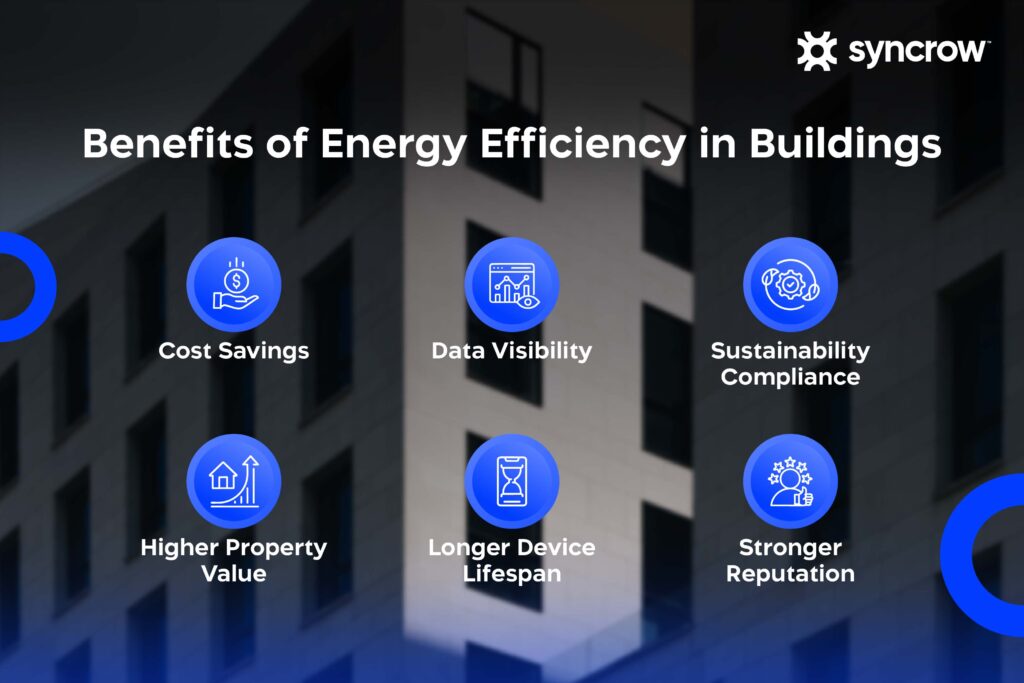
Improving energy efficiency delivers value far beyond lower utility bills. It impacts operational performance, regulatory compliance, and long-term asset value.
Lower Energy Costs
The most immediate benefit of energy efficiency is reduced energy costs. By lowering energy consumption and improving system performance, buildings require less energy to operate. Over time, these savings offset efficiency investments and contribute to reduced energy costs across the building’s lifecycle.
Data Visibility and Smarter Decision-Making
Access to accurate energy consumption data provides a deeper understanding of energy use patterns. This visibility allows building operators to make informed decisions, optimize energy systems, and continuously enhance energy efficiency. Better information leads to better energy outcomes.
Sustainability Reporting and Compliance
Regulatory frameworks across the globe require transparency around building energy performance. Energy-efficient buildings are better positioned to meet compliance requirements, improve sustainability reporting, and demonstrate alignment with clean energy goals.
In the UAE, for example, the government has introduced mandatory targets for GHG emissions that are set to be implemented later in 2026. With this new approach, companies must prepare for structured reporting and active monitoring of their buildings.
Increased Property Value
Buildings with strong energy performance certificates (EPCs) are more attractive to tenants, buyers, and investors. Higher energy performance ratings signal lower operating costs, modern building technologies, and future-ready infrastructure, driving higher property value.
Longer Device and System Lifespan
Reducing unnecessary energy use reduces stress on building systems. Optimized HVAC units, lighting systems, and energy systems experience less wear, extending equipment life and reducing maintenance costs.
Stronger Market Reputation
Buildings that demonstrate greater energy efficiency benefit from an improved reputation. Sustainability, energy conservation, and responsible energy use are increasingly important to occupants, investors, and regulators alike.
How to Improve an Energy Performance Certificate (EPC) Rating
Improving an energy performance certificate rating requires measurable improvements in the building’s energy performance. Key actions include upgrading insulation, optimizing heating and cooling systems, switching to LED lighting, and improving energy management practices.
Installing smart monitoring systems allows building owners to validate actual energy consumption and demonstrate improvements in actual energy performance. Integrating renewable energy sources and reducing primary energy requirements also positively impact EPC scores. Together, these steps improve the energy performance of buildings and align them with regulatory benchmarks.
SyncOS: An All-in-One IoT Solution for Energy-Efficient Buildings
SyncOS is designed to support energy efficiency across both new and existing buildings. As a scalable, retrofit-friendly platform, SyncOS connects IoT devices, sensors, and building systems into a single software layer, without requiring major infrastructure changes.
By collecting real-time energy consumption data, SyncOS helps building owners understand their building’s energy, identify inefficiencies, and optimize energy use across lighting, HVAC, water, and other systems. The platform supports commercial and residential buildings, making it suitable for diverse use cases.
SyncOS enables better energy performance through centralized visibility, actionable insights, and smarter control. It helps you reduce energy, improve energy efficiency in your building, and move toward sustainable and energy-efficient operations.
If you’re looking to enhance energy efficiency, our team offers a free consultation to assess your building’s needs and outline a clear path to measurable energy savings.
Contact us today to start building smarter, more energy-efficient spaces.