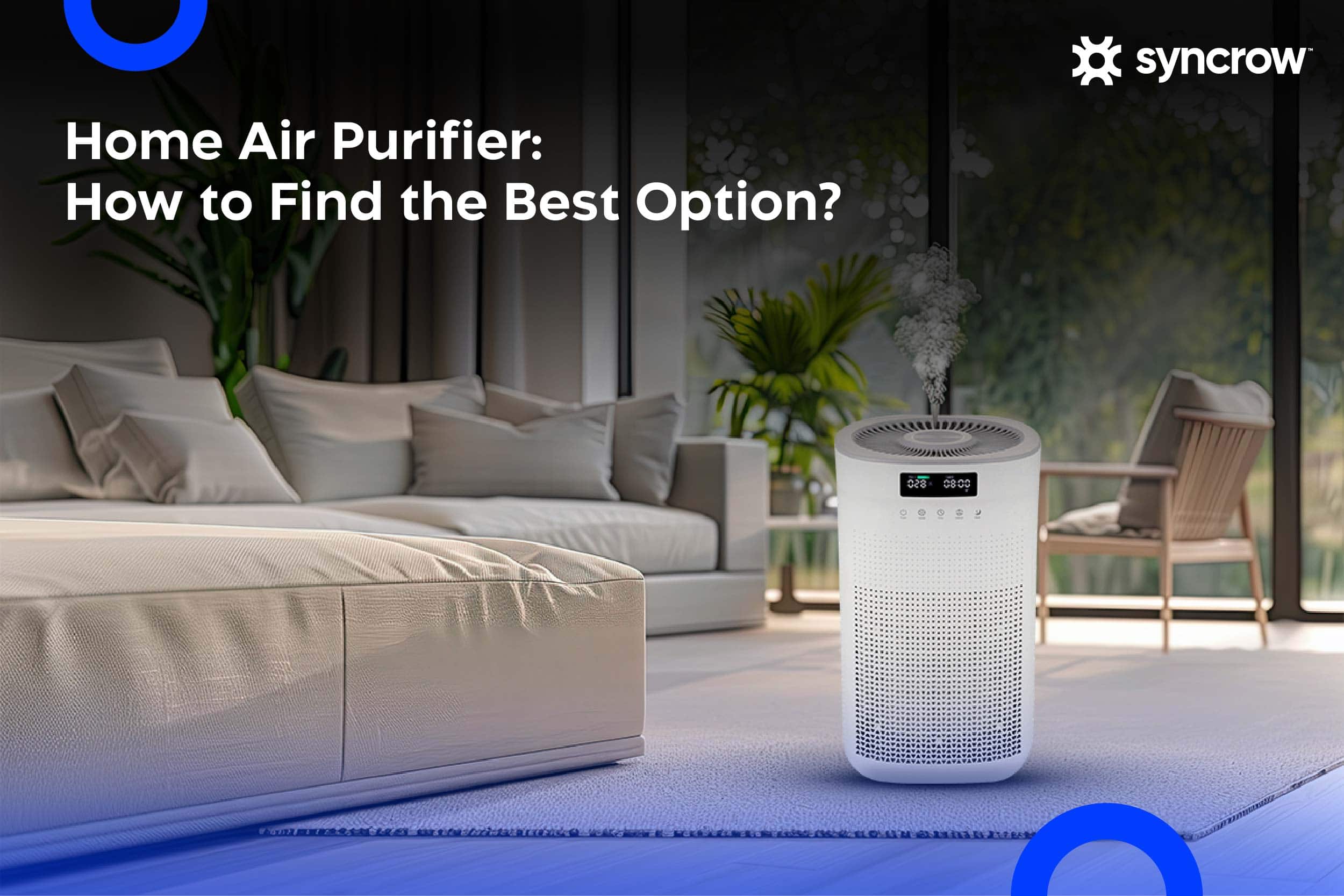
Indoor air quality plays a critical role in maintaining health and comfort, especially for children, the elderly, and individuals with respiratory conditions. Poor indoor air can lead to allergies, fatigue, and long-term health issues, making clean air an essential part of a healthy home environment.
A home air purifier is an effective solution to remove airborne pollutants and improve overall indoor air conditions. With advanced filtration, smart features, and energy-efficient operation, smart air purifiers enhance comfort, support wellbeing, and integrate seamlessly into daily life, making them an increasingly important addition to today’s homes in the UAE.
What Is a Home Air Purifier?
A home air purifier is a device designed to improve air quality indoors by removing airborne pollutants such as dust, allergens, smoke, and harmful particles. It is commonly used in residential spaces to create a cleaner and healthier environment and support residents’ comfort and wellbeing.
In homes with central air conditioning systems, particularly central HVAC systems in buildings, air purifiers are especially important as they help maintain cleaner circulated air, reducing indoor pollution buildup and improving air quality across all rooms.
How Do Air Purifiers Work?
Air purifiers work by drawing in indoor air through a fan and passing it through multiple filter layers to remove particles and pollutants. Cleaned air is then circulated back into the room. Air purifiers can cover specific areas based on their capacity to maintain healthy air conditions.
Dust, pollen, smoke, bacteria, and fine particles like PM2.5 can all be removed by the air purifier to help maintain a cleaner and healthier indoor environment, especially in areas exposed to smoke.
Benefits of a Home Air Purifier
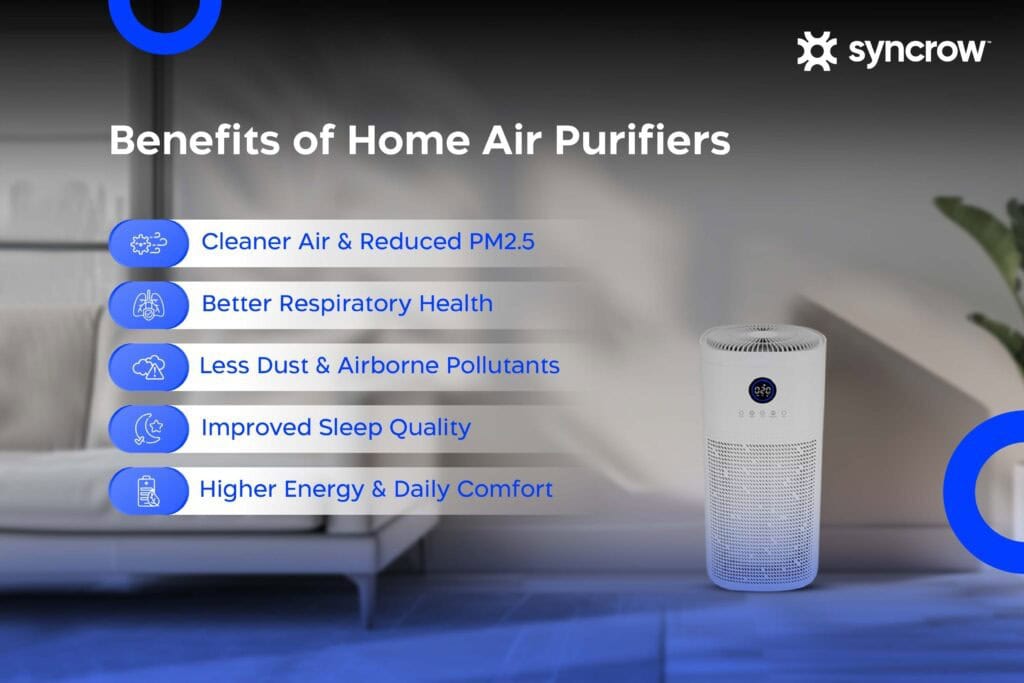
Home air purifiers play an important role in maintaining clean indoor air and supporting overall comfort. Their benefits go beyond basic filtration, contributing to health, productivity, and better living conditions. The main benefits of home air purifiers:
- Reduce PM2.5 and airborne pollutants.
- Improve indoor air quality.
- Enhance respiratory health in AC-heavy environments.
- Support health and wellbeing.
- Minimize indoor dust accumulation.
- Enhance sleep quality.
- Boost energy and productivity.
Reduce PM2.5 and Airborne Pollutants
Home air purifiers effectively capture fine particles such as PM2.5, dust, and smoke, helping reduce indoor pollution levels and maintain safer air conditions, especially in environments exposed to outdoor contaminants.
Improve Indoor Air Quality
A home air purifier helps maintain cleaner indoor air and creates a more comfortable and breathable living environment by continuously removing airborne pollutants such as dust, smoke, and fine particles.
Enhance Respiratory Health in AC-Heavy Environments
In homes with continuously operating air conditioning systems, air purifiers help reduce airborne irritants, supporting better respiratory health and minimizing discomfort caused by recirculated pollutants.
Support Health and Wellbeing
Home air purifiers help minimize respiratory irritation and allergy symptoms by reducing allergens, bacteria, and harmful particles, contributing to improved overall health and a safer indoor environment for families.
Minimize Indoor Dust Accumulation
Air purifiers help reduce dust buildup by capturing particles before they settle on surfaces, supporting a cleaner home environment and reducing the need for frequent cleaning and maintenance.
Enhance Sleep Quality
Better breathing contributes to improved sleep quality in a cleaner and quieter environment. Home air purifiers remove irritants that can disrupt breathing, helping individuals experience deeper and more restful sleep and improved nighttime comfort.
Boost Energy and Productivity
Cleaner air supports better oxygen flow and reduces exposure to pollutants that cause fatigue, allowing residents to feel more focused, energized, and productive throughout the day. This is highly valuable for people working from home.
When You Need a Home Air Purifier
Indoor air conditions can vary depending on lifestyle, environment, and home setup. In certain situations, air purifiers become more than a convenience, helping maintain cleaner air, reduce pollutants, and support overall comfort and wellbeing in daily living.
- Allergies or frequent respiratory irritation.
- Noticeable dust accumulation on surfaces.
- Air conditioning running continuously (24/7).
- Pets (hair, dander, and odors).
- Living in high-dust or polluted environments.
- Presence of smoke or cooking odors.
- Poor ventilation or limited fresh air circulation.
How Smart Home Air Purifiers Work?
Smart home air purifiers combine traditional filtration with advanced IoT connectivity to automate indoor air cleaning. They use built-in sensors or connect to air quality monitors to detect pollution levels in real time and automatically adjust fan speed and purification modes as needed. Through mobile apps or smart home systems, users can monitor air conditions, schedule operation, and receive alerts, and integrate purification with other automated home scenes.
Why Are Smart Air Purifiers Important in UAE Homes?
Smart air purifiers help maintain healthier indoor air quality by reducing pollutants, regardless of the external environment, making them highly relevant for UAE homes with continuously operating cooling systems. The main features of a smart home air purifier are:
- Maintaining indoor air quality in harsh environments.
- Managing allergies and respiratory conditions.
- Automated air purification.
- Integration with smart home systems.
- App-based monitoring and control.
- Reducing indoor pollution during sandstorms.
- Managing air quality in sealed buildings.
- Improving air quality in ac-recirculated spaces.
Maintaining Indoor Air Quality in Harsh Environments
Dust, sand, and outdoor pollution frequently enter indoor spaces, especially through ventilation systems. Smart air purifiers help maintain consistent indoor air quality despite environmental conditions.
Managing Allergies and Respiratory Conditions
Smart air purifiers help reduce airborne allergens such as dust, pollen, and fine particles, supporting better respiratory health in the UAE and minimizing allergy-related discomfort indoors.
Automated Air Purification
With real-time sensors, smart air purifiers detect changes in air quality, share data to a centralized platform, and adjust performance instantly, ensuring continuous purification without manual intervention and helping maintain consistent indoor air conditions.
Integration with Smart Home Systems
Smart air purifiers can connect with centralized home automation platforms, allowing coordinated control with HVAC systems and smart climate control devices, creating a more efficient and responsive environment across the home.
App-Based Monitoring and Control
Through mobile applications, users can track air conditions in real time, control purifier settings remotely, receive alerts, and manage schedules, providing greater convenience and visibility into indoor environmental conditions.
Reducing Indoor Pollution During Sandstorms
Frequent sandstorms in the UAE significantly increase the amount of fine dust and airborne particles entering indoor spaces, especially through ventilation systems. Smart air purifiers help reduce these pollutants and maintain stable indoor air conditions during and after such events.
Managing Air Quality in Sealed Buildings
Modern UAE buildings are often tightly sealed to improve cooling efficiency, which can limit natural airflow and trap indoor pollutants. Smart air purifiers help improve air circulation indoors by reducing accumulated contaminants and maintaining healthier air conditions.
Improving Air Quality in AC-Recirculated Spaces
Continuous use of air conditioning leads to constant air recirculation, which can gradually spread and concentrate indoor pollutants. Smart air purifiers help clean recirculated air, ensuring consistent air quality and reducing the buildup of contaminants over time.
Where to Place an Air Purifier in the Home?
Proper placement of an air purifier is essential to ensure efficient airflow, full coverage, and accurate air quality detection. Key considerations include room size, airflow direction, proximity to pollution sources, and avoiding obstructions that may limit performance or circulation. Rooms that most require smart air purifiers include:
- Living Room
- Bedroom
- Home Office
- Kitchen
- Children’s Room
Tips to Choose the Best Home Air Purifier
Choosing the right air purifier can improve indoor air quality, support family health, and enhance overall comfort. The selection process should rely on the specific room requirements, such as room size and existing devices, to upgrade the quality of life inside the home. Most professionals share these tips for choosing an effective smart home air purifier:
- Smart features for modern homes.
- Room size.
- Adjustable modes (sleep, turbo, auto).
- High-precision sensors.
- Multi-stage filtration system.
- Smart home integration.
- Energy efficiency.
- High-quality air purifier.
Smart Features for Modern Homes
A home air purifier with smart features, such as app control, scheduling, and automation, will enhance convenience and efficiency, allowing users to monitor air quality, adjust settings remotely, and integrate air purification into daily smart home routines as part of a broader wellness approach.
Room Size
Usually, each smart air purifier has a specified coverage area, where it operates effectively. Selecting an air purifier with the right coverage area for the room size ensures effective performance and provides consistent air cleaning without overworking or underperforming in the space.
Adjustable Modes (Sleep, Turbo, Auto)
Smart air purifiers come with multiple operating modes, providing flexibility for different needs. Sleep mode ensures quiet operation at night, while turbo and auto modes adjust performance based on air quality and purification requirements in high-occupancy rooms.
High-Precision Sensors
High-precision sensors detect pollutants like PM2.5 in real time, enabling the purifier to respond immediately to air quality changes and maintain a consistently clean and healthy indoor environment.
Multi-Stage Filtration System
A multi-stage filtration system combines pre-filters, HEPA filters, and activated carbon layers to capture dust, allergens, odors, and harmful particles before recirculating clean air back into the space for more comprehensive purification.
Smart Home Integration
Integration with smart home solutions allows air purifiers to work alongside other devices, enabling centralized control, automation, and improved coordination with HVAC systems for better indoor air management. This supports a more efficient indoor environment by integrating air purifiers with devices such as humidifiers and sensors.
Energy Efficiency
Energy-efficient air purifiers consume less power while maintaining reliable performance, helping reduce electricity costs and supporting sustainable home operations without compromising on air quality.
High Quality Air Purifier
A high-quality air purifier is built with durable materials, reliable filtration technology, and consistent performance, ensuring long-term efficiency and dependable air purification for everyday residential use.
Smart vs Traditional Home Air Purifiers: Which Is the Best Option
Many people consider whether to choose traditional or smart air purifiers for their homes, considering the modern features included in smart purifiers. Understanding the main differences between them will help make a better and more considered choice.
| Feature | Traditional Air Purifier | Smart Air Purifier |
| How it works | Manual operation with basic filtration | Sensor-based operation with automated purification |
| Automation | Not available | Automated |
| LED Display | Basic or not available | Advanced display with touch panel |
| Sleep Mode | Manual | Automatic quiet mode for night use |
| Fan Speed | Manually controlled | Auto-adjusted |
| Connectivity | No connectivity | Wi-Fi or app-based control |
| Smart Home System Integration | Not supported | Fully integrated |
Conclusion
Air purifiers are most effective when integrated into a complete smart home system, improving indoor air quality by removing pollutants, supporting health, enhancing comfort, and enabling efficient automated purification.
As part of a connected living approach, solutions like those provided by Syncrow, a smart home solution company in Dubai, to integrate smart air purification with integrated home automation and wellness systems, enabling better air quality management, real-time monitoring, and a more responsive, healthier indoor environment. End-to-end smart home solutions can enhance indoor living quality, we help homeowners explore suitable options based on their specific needs with our free consultation.
FAQs About Home Air Purifier
Do Home Air Purifiers Work?
Yes, home air purifiers are effective in removing airborne particles such as dust, smoke, and allergens, helping maintain better indoor air quality when used correctly
and maintained regularly.
Can a Household Air Purifier Help with Allergies?
Air purifiers create a cleaner indoor environment that supports better respiratory comfort, thus, they help reduce allergy symptoms by capturing common allergens like pollen, pet dander, and dust mites.
What Is the Best Home Air Purifier?
The best home air purifier depends on room size, filtration technology, and included features such as sensors, smart controls, and energy efficiency, ensuring it meets specific indoor air quality needs.
How to Purify Air at Home?
Air can be effectively purified at home by using air purifiers, improving ventilation, and reducing indoor pollutants while maintaining comfort.