Behind a smart home system and connected lights, thermostats, and sensors, there are home automation protocols that make everything work together. Home automation communication protocols act as the foundation of any system, enabling smart devices to exchange data and respond to commands.
The importance of choosing the right communication standard is significant. A well-designed automation system depends not only on high-quality devices but also on how effectively they connect and operate together to deliver reliable performance and smooth automation.
This blog explores everything about home automation protocols, why they matter, differences between smart home protocols, selection factors, and the benefits of smart home automation.
What Are Smart Home Protocols?
Smart home protocols are wireless and wired communication technologies and standards that allow devices such as lights, switches, thermostats, curtains, sensors, and locks to communicate within a connected system. These protocols define how data is transmitted, received, and secured between smart home devices to ensure reliable performance and effective coordinated automation.
Choosing a compatible home automation protocol is essential for building a stable and scalable smart home system. When devices operate on well-matched communication standards, they work together seamlessly, making the system easier to manage, expand, and maintain.
Incompatible smart home protocols can lead to limited functionality, connectivity issues, or reduced automation efficiency.
Why Do Home Automation Protocols Matter?
Home automation communication protocols matter because they are responsible for the reliability of smart device communication, the security of the smart home system, the number of devices that can connect seamlessly, and how efficiently energy is used. The right protocol ensures stable performance, better security, faster response times, and long-term scalability.
Types of Smart Home Protocols
There are many types of smart home protocols with different features to keep your automation system stable, compatible, and efficient. Having the right smart home protocol depends on your smart home automation system requirements.
The most common home automation protocols used in modern smart home systems include Wi-Fi, Bluetooth, Zigbee, Z-Wave, Thread, and Matter.
Wi-Fi
Wi-Fi is a wireless protocol that connects smart devices directly to the internet through the home router, offering high bandwidth and easy setup without the need for additional hubs. It supports Wi-Fi devices like smart cameras, smart plugs, and other smart appliances. However, it is considered a high-power protocol and may overload networks when many devices are connected.
Best used for: High-bandwidth devices like cameras, smart TVs, smart plugs, and smart appliances.
Bluetooth
Bluetooth is a low power protocol that enables short-range and direct device-to-device communication. The great thing about the Bluetooth protocol is that it is simple to install and ideal for small setups. Still, it has a limited range and cannot support the entire smart home system without additional bridging devices.
Best used for: Small apartments, smart locks, and wearable-connected devices.
Zigbee
Zigbee is a mesh-based, low-power protocol that allows devices to relay signals to each other. With the Zigbee protocol, each device works as an extension point that expands the network area. It supports many smart connected devices. However, it typically requires a compatible hub for operation.
Best used for: Large smart homes with sensors, smart lights, home security, and automation systems.
Z-Wave
Z-Wave is a secure, low-energy mesh network protocol designed specifically for home automation. It offers strong compatibility and stable connections. But it supports fewer devices per network compared to some alternatives and requires a dedicated hub.
Best used for: Reliable security systems, smart locks, and structured home automation setups.
Thread
Thread is a low-power, IP-based mesh protocol designed for fast, secure communication between smart devices. It improves reliability and reduces response time. This home automation protocol requires compatible border routers and newer hardware for full functionality.
Best used for: Modern smart homes focused on fast, secure, and scalable automation.
Matter
Matter is a universal smart home standard. This protocol is popular among many smart brands to improve compatibility between brands and smart home products. It works over Wi-Fi and Thread, enhancing compatibility and security. However, adoption is still expanding, and older devices may require updates.
Best used for: Multi-brand smart homes aiming for seamless cross-platform compatibility.
5G Network
5G is a high-speed cellular network technology that enables ultra-fast data transmission, low latency, and the ability to connect a massive number of devices simultaneously. In smart home environments, 5G enhances real-time communication, supports high-bandwidth applications, and reduces delays in device response.
Best used for: Large properties, smart cities, remote monitoring systems, high-bandwidth security cameras, and advanced IoT deployments.
Zigbee vs Z-Wave vs Matter: Which Smart Home Protocol is Best?
When you choose the right protocol, you will get the best out of your smart home automation. The best protocol keeps your smart home connected, stable, secure, and comfortable.
When you choose the right protocol, you will get the best out of your smart home automation. The best protocol keeps your smart home connected, stable, secure, and comfortable.
| Protocol | Power | Security | Range | Limitation | Devices | Best For |
| Wi-Fi | High | Strong | Medium | Network congestion | Moderate | Cameras, appliances |
| Bluetooth | Very low | Good | Short | Short range | Low | Smart locks |
| Zigbee | Low | Strong | Long (mesh) | Needs hub | Very High | Sensors, lighting, and automation |
| Z-Wave | Low | Strong | Long (mesh) | Needs hub | Medium | Security systems |
| Thread | Very low | Strong | Long (mesh) | Needs a border router | Medium | Modern automation |
| Matter | Varies | Very strong | Varies | Expanding support | Medium | Multi-brand homes |
| 5G | High | Very strong | Very long (cellular) | Coverage dependent | Very high | Large-scale IoT, remote monitoring |
Can My Home Have Different Smart Automation Protocols?
Yes, a home can use different smart automation protocols at the same time. In fact, many modern smart homes operate on a multi-protocol setup to ensure the best performance, reliability, and flexibility. The efficiency of using different protocols relies on a compatible gateway or controller that supports multiple standards.
For example, Wi-Fi may be used for cameras and smart TVs, while Zigbee handles sensors and lighting through a hub. Thread and Matter can also work alongside existing systems to improve compatibility.
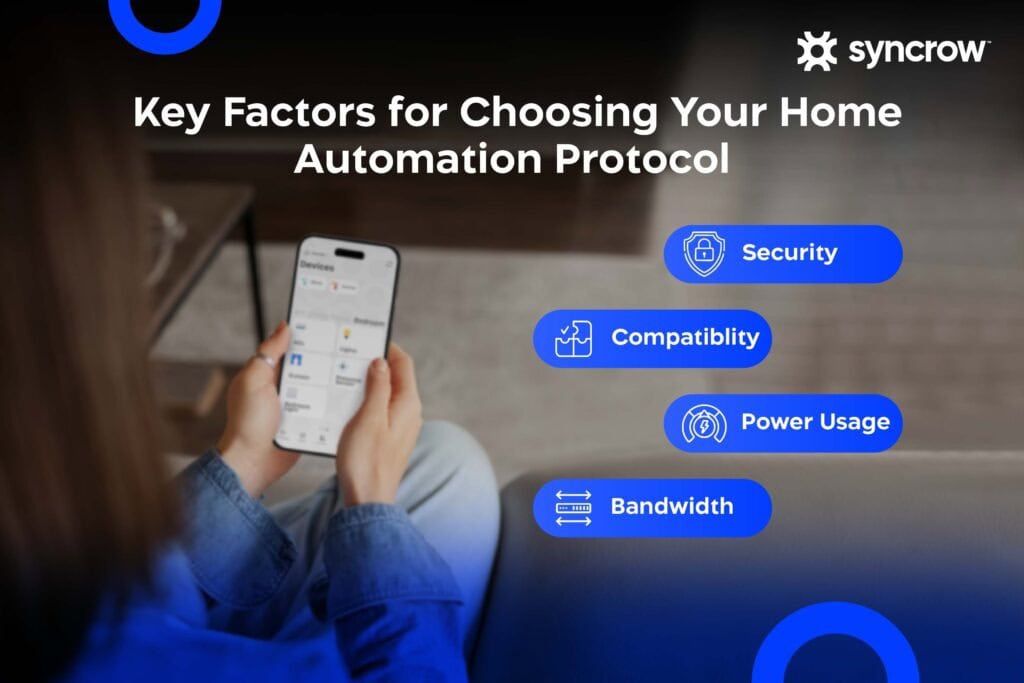
Key Factors for Choosing Your Home Automation Protocol
Smart home protocols define the communication between devices. Therefore, choosing the protocols should depend on the smart systems you have, expansion plans, and the compatibility of these devices.
Security
Protocol security is a critical factor when selecting a home automation protocol. Smart home devices handle sensitive data and control essential systems; thus, protocols should have strong encryption and authentication methods to reduce the risk of hacking, unauthorized access, and data breaches. This data protection is vital to protect your personal privacy and security as well.
Compatibility
Home automation protocol compatibility determines whether smart devices from different brands can work together seamlessly or not. A compatible protocol reduces integration issues, lowers the need for additional hubs, and guarantees smooth communication across lighting, climate, wellness, home security, and entertainment systems within the same system.
Power Usage
This is an important factor to consider, as power usage affects both energy efficiency and device maintenance. Low-power home automation protocols extend battery life for sensors, locks, and switches, reducing frequent replacements. Having an energy-efficient protocol improves long-term sustainability while supporting stable performance across multiple connected devices. This is highly important for Dubai residents who travel during the summer and want to keep their homes automated.
Bandwidth
Bandwidth impacts how much data can be transmitted at once, which affects system speed and performance when multiple devices operate simultaneously. Selecting the right bandwidth ensures consistent speed and system reliability. The bandwidth of a protocol affects the possibility of expanding your smart home automation.
Benefits of Smart Home Automation
Smart home automation in UAE and KSA homes is not a trend anymore, but a necessity to meet modern life requirements. People are expecting more comfort, automation, and simplicity in their daily lives.
Luxurious Lifestyle
Smart home automation enhances everyday living by offering better comfort and convenience based on your preferences. Automated lighting, climate control, and curtain systems create tailored environments that adapt to daily routines, delivering a seamless and modern lifestyle experience with minimal manual effort.
Security
Having a smart home security system with connected cameras, motion sensors, smart locks, and real-time alerts will help you monitor activity remotely, receive instant notifications, and automate responses to unusual events. This smart home automation system creates a safer environment and greater peace of mind.
Compatibility
A compatible smart home system connects multiple devices into one hub. When smart heating, lighting, climate, security, and entertainment systems operate together, daily management becomes simpler and more efficient. This makes scenes and schedules a greater daily experience.
Efficiency
The communication between devices in a smart home system improves operational efficiency and maintains comfort. This is done by scheduling devices, reducing manual control, and adjusting performance based on your daily schedule. Smart thermostats, lighting schedules, and presence sensors ensure systems operate only when needed.
Save Energy and Cost
Compatible smart home automation reduces unnecessary energy consumption by monitoring usage and adjusting device activation. Scheduled heating, optimized cooling, and automated lighting lower electricity usage over time while promoting sustainable living and long-term cost savings.
The Bottom Line
A successful smart home is not only about devices, but about how those devices communicate. Choosing the right home automation protocols is essential for building a smart home system that performs reliably, securely, and efficiently. A well-planned protocol ensures seamless integration, stability, and future scalability.
For homeowners seeking a fully integrated smart home experience, Syncrow designs and delivers end-to-end automation solutions powered by reliable and scalable technologies. Learn everything you need with a free consultation with our expert today.
FAQs About Home Automation Protocols
What Is Matter Smart Home Protocol?
Matter is a popular smart home protocol that is compatible across major smart home systems and platforms. It is designed to improve compatibility between devices from different brands. It works over Wi-Fi and Thread, enabling secure, reliable communication while simplifying setup.
What Is the Most Popular Smart Home Protocol?
Zigbee is currently the most popular smart home protocol. Many smart devices connect directly to Zigbee without network interference, making it convenient, accessible, and easy to install for everyday users.
What Protocol Is Used in Home Automation?
Home automation commonly combines more than one protocol for optimal performance, including Wi-Fi, Zigbee, Z-Wave, Bluetooth, Thread, and Matter. The protocol choice depends on system size, device type, power efficiency, and compatibility requirements.
What Is the Best Protocol for Home Assistant?
The best protocol for Home Assistant depends on system needs, but Zigbee and Z-Wave are widely preferred for stability and large device support. Wi-Fi is suitable for high-bandwidth devices, while Thread and Matter are growing options for future-ready automation systems.
What Are the 5 Communication Protocols?
The five common communication protocols in smart homes are Wi-Fi, Bluetooth, Zigbee, Z-Wave, and Thread. Each offers different features in power usage, range, security, and scalability, allowing homeowners to choose based on their automation requirements and integrated systems.