Modern living is deeply connected to technology, and smart home devices are transforming the way homes operate. These devices are part of modern smart home solutions that make daily life simpler, convenient, and more efficient by allowing homes to respond to people’s needs with minimal effort.
Smart home devices help manage lighting, climate, security, and entertainment with high efficiency. They improve comfort, enhance safety, and reduce energy usage to make daily routines easier, smarter, and more enjoyable.
This blog explores the latest smart home devices, available options, and how to control them directly from your smartphone.
What Are Smart Home Devices?
Smart home devices are internet-connected products designed to automate and control different aspects of a home. They include things like smart door locks, smart switches, smart hubs, and many more. Smart home devices work through automation scenes, control panels, apps, and voice commands to simplify daily routines. When integrated as a system, smart home devices create a more efficient, secure, and responsive living environment.
Smart Lighting Devices
Integrated smart lighting devices allow effective lighting control in the entire home. As one of the most popular smart home gadgets, they support automation, scheduling, and scene-based lighting for different daily needs.
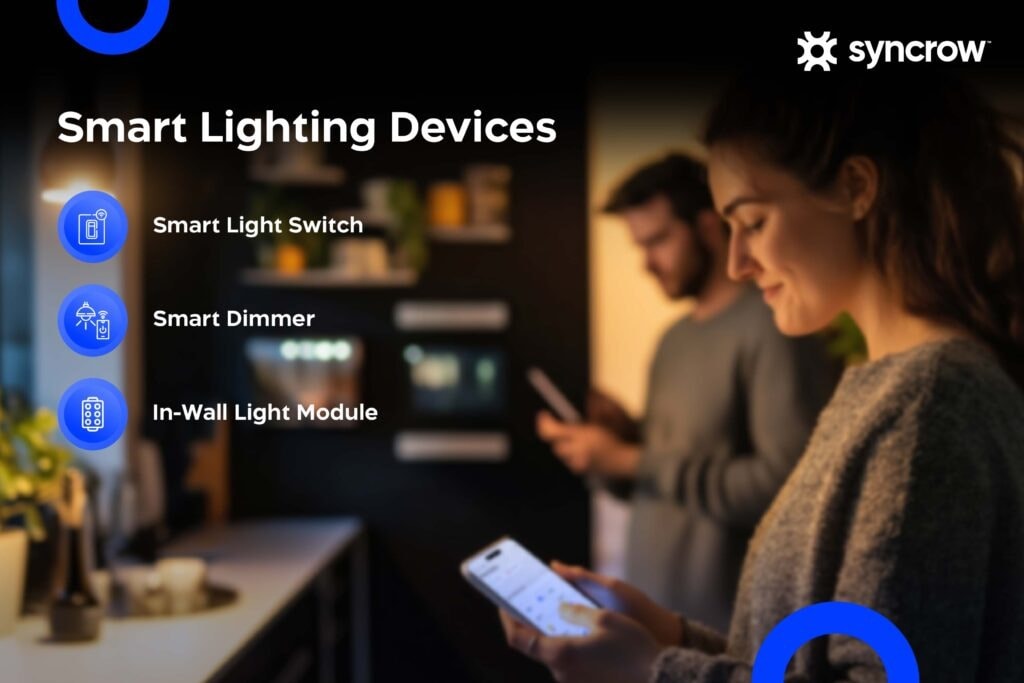
Smart Light Switch
Smart light switches offer the traditional wall-switch function and allow lights to be controlled through apps, automation scenes, or voice assistants. Smart switches also support scheduling and remote access for a better user experience compared to traditional smart bulbs.
Smart Dimmer
Smart dimmers allow you to adjust light brightness to match different moods and activities. They create softer lighting when needed and help reduce unnecessary energy consumption.
In-Wall Light Module
In-wall light modules are installed behind existing traditional switches or inside electrical boxes to upgrade and add smart features without major changes. Installing this device enables automation, remote control, and integration with the smart home lighting system.
Smart Climate Control Devices
The best smart home devices help create a comfortable and balanced home environment. Smart climate devices control temperature, air quality, and humidity based on daily needs.
Smart Thermostat
A smart thermostat allows full control over indoor temperature through automation, schedules, or mobile apps. It adapts easily to space temperatures and daily routines. It also helps ensure comfort during the day and reduces unnecessary energy usage.
Air Quality Sensor
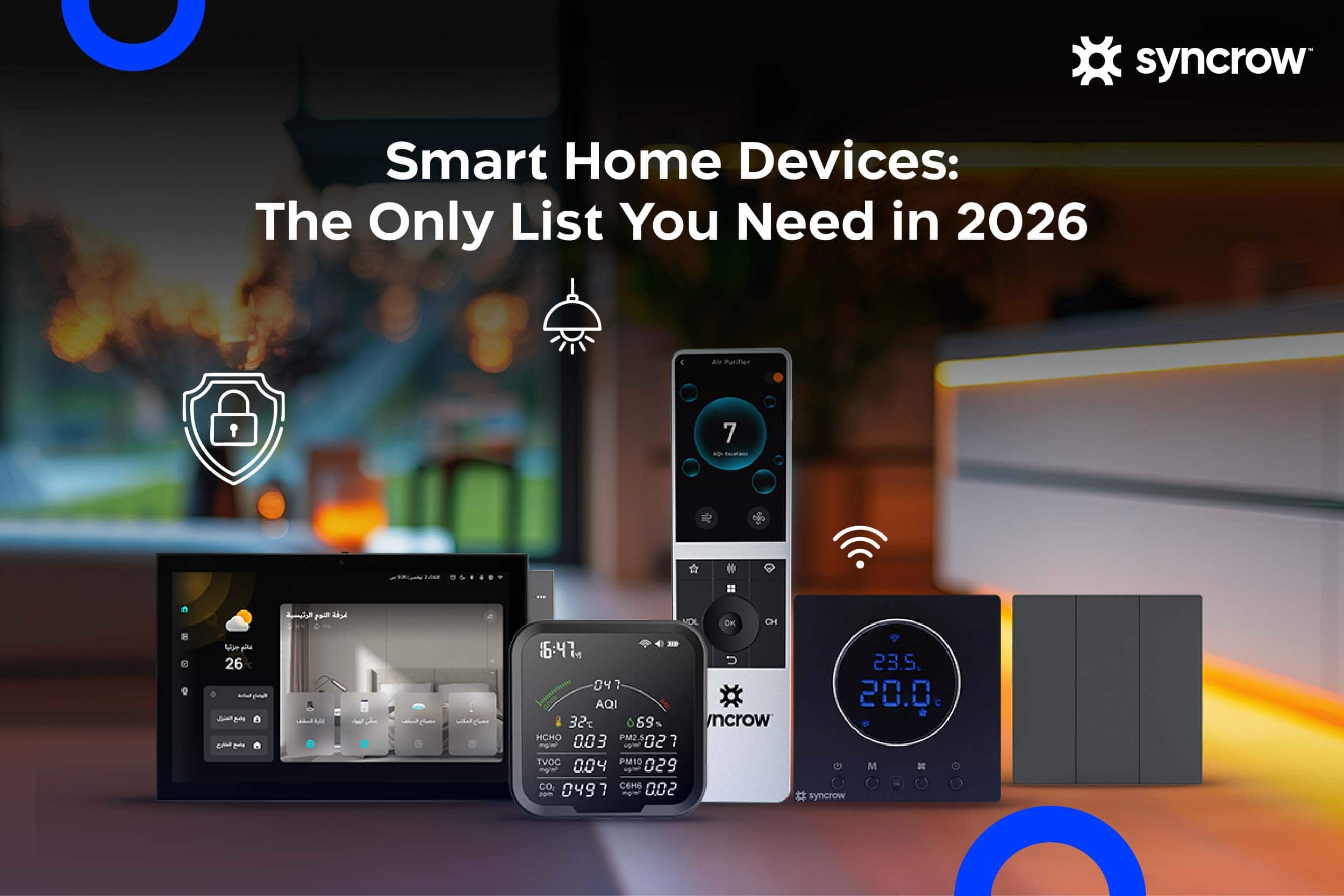
Air quality sensors monitor indoor conditions, including temperature, humidity, and air pollutants. They provide real-time data and trigger alerts or automated actions when conditions change. Modern air quality sensors can monitor 6 different air pollutants in real time, including harmful gases and small particles.
Smart Air Purifier
Smart air purifiers can automatically remove pollutants and airborne particles based on air quality levels. They aim to improve indoor air freshness and overall comfort. App-based control and automation make the air purification process more efficient and convenient.
Smart Air Humidifier
Smart air humidifiers control humidity levels to maintain balanced indoor comfort based on your needs. They prevent overly dry air and support better breathing. Automated operation ensures stable humidity without any manual adjustments in a connected home.
Water Heating Control Devices
Water heating control devices allow users to manage and optimize water heating directly, ensuring greater comfort, efficiency, and control.
Smart Heater / Water Heater
A smart water heater allows remote control and scheduling of hot water based on usage through a connected system or app. This smart home device helps ensure hot water is available when needed while avoiding unnecessary energy consumption.
Smart Home Hubs
A smart home hub is the brain behind any smart home system. It connects and manages multiple smart home devices from one place.
Smart Speaker
Smart speakers, like Alexa and Google Home, allow voice control of connected smart home devices. They provide hands-free access to lighting, climate, and other automated functions, making everyday interactions with the home easier.
Smart Screens and Control Panels
Smart screens provide centralized control for multiple smart home systems from a single interface, whether for each room or the entire home. Touchscreens allow users to manage lighting, AC, security, and scenes easily. This control creates a more comfortable smart home experience.
Smart Curtain Devices
Smart curtains allow automated and remote control without changing the curtain fabric or style. They improve comfort and privacy while maintaining the original design.
Smart Curtain Motor
Smart curtain motors improve comfort, privacy, and daily convenience. These smart home devices automate curtain movement (open and close) based on schedules, scenes, or manual control. They are available in wired or battery-powered options.
Smart Curtain Module
Smart curtain modules are added to existing curtain motors to enable smart controls. They integrate curtains into a wider smart home system without replacing the traditional motor. This offers flexibility and efficiency while keeping the overall setup.
Smart Energy Saving Devices
Managing energy consumption is very important in the UAE and KSA due to high electricity costs. Smart home energy control devices help monitor and reduce unnecessary power usage.
Smart Plug
Smart plugs allow appliances to be switched on or off remotely through an app or automation. They help reduce unnecessary power usage by controlling devices more efficiently. Smart plugs also support energy monitoring for better visibility.
Smart Clamp
Smart clamps monitor electricity consumption at the home level. They provide real-time insights into current energy usage. They support shared access, allowing multiple users to control and monitor connected devices simultaneously through the mobile app.
Access Control Devices
This type of smart home device allows residents to get more control over their home and who can enter it.
Smart Lock
Smart locks offer keyless entry using different methods, like mobile apps, codes, fingerprints, or facial recognition. New facial recognition smart locks offer faster access and enhanced security. They also provide controlled and temporary access for visitors or staff with instant notifications.
Garage Door Opener
Smart garage door openers enable remote control and monitoring of garage access, which is especially popular for villa owners in the UAE and KSA. They allow doors to be opened or closed from anywhere through a connected app. This improves convenience and security for daily use.
Smart Video Intercom
Smart video intercoms allow two-way audio and video communication at access points. They help identify visitors before granting access, even when you are away from home. Integration with other smart access control devices enhances overall security. Modern smart intercoms allow you to view the video in real-time through the smart home app.
Security System and Safety Devices
Having a smart home security system is a top priority for all people. Smart security and safety devices are a core part of any smart home system.
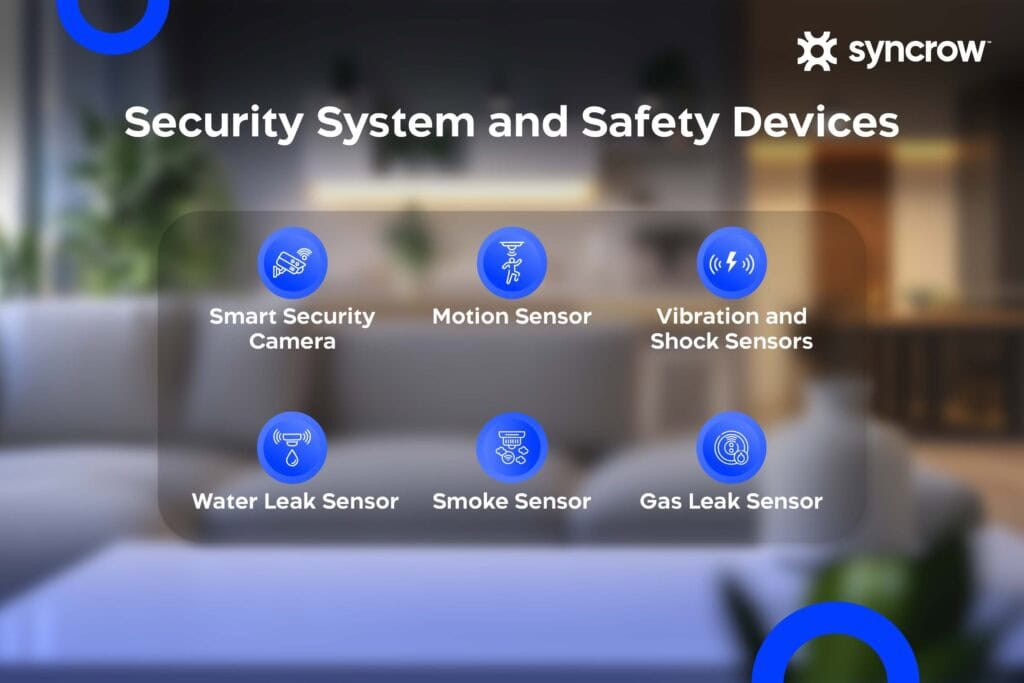
Smart Security Camera
Smart cameras provide real-time video monitoring and instant alerts. They help homeowners keep track of indoor and outdoor spaces at all times. Remote control and access ensure better visibility and peace of mind, even when you are not home.
Motion Sensor
Motion sensors detect movement and trigger alerts or automated actions. They are usually used for security, lighting automation, and energy-saving scenarios. The fast response of these motion sensors improves both safety and convenience.
Vibration and Shock Sensors
Vibration and shock sensors sense unusual activity or forced entry attempts. They are commonly installed on windows and doors. They provide early warnings for potential break-ins or tampering, adding an extra layer of protection to your home.
Water Leak Sensor
Water leak sensors spot unwanted water presence and send immediate alerts. They help avoid damage caused by leaks in kitchens, bathrooms, or utility areas. Early detection reduces repair costs and damage risk. These devices are gaining popularity in the UAE following the flood that occurred in 2024, which made residents aware of the importance of detecting water leaks.
Smoke Sensor
Smoke sensors detect smoke levels and trigger alarms in case of fire. Professional integration with smart systems enhances overall home safety. They provide early warnings to support quick response and evacuation.
Gas Leak Sensor
Gas leak sensors are lifesaving sensors that monitor gas levels and alert occupants to potential threats. They help prevent serious safety risks by detecting leaks early. Automated alerts improve response time and your family’s safety.
Smart Entertainment Devices
These devices are one of the most popular smart home systems. They enhance comfort and enjoyment in everyday life.
Smart TV
Smart TVs connect to home Wi-Fi to offer streaming and app-based entertainment. They can be fully integrated into smart home scenes for a unique watching experience. Centralized smart TV control improves ease of use.
Smart Sound System
With centralized or room-based control, smart sound systems provide an immersive experience. They allow music to be played seamlessly across different areas of the home. These smart home devices, integrated with automation, enhance the entire entertainment experience.
IR Receiver Module
IR (Infrared) modules allow smart control of traditional infrared-based devices. They allow TVs, sound systems, and other equipment to be managed through a single app or system. This reduces the gap between traditional devices and smart automation.
How Smart Home Devices Work Better as One System?
Smart home devices work better as a system when they are professionally designed and installed to communicate, operate, and automate together rather than as separate gadgets.
Even starting small, such as a smart light hub, outdoor smart security, or climate control on one level of the home, creates a more comfortable and reliable experience. A system-based approach also allows easy extension in the future without rework or compatibility issues.
Syncrow for Smart Home Devices and Professional Integration
Professional integration of smart home solutions with end-to-end service enhances comfort, convenience, and reliability on all levels. System-level design considers the home as a whole, planning how devices interact and complement each other without compatibility issues.
Syncrow plans and integrates smart devices thoughtfully to help you enjoy a home that is comfortable, secure, and easy to manage. Exploring professional guidance can help you get the most out of your smart home system while keeping it flexible for the future. Get professional guidance with our free consultation today.
FAQs About Smart Home Devices
What Are Examples of Smart Devices?
Smart devices include smart lights, smart thermostats, smart locks, cameras, plugs, air purifiers, and more. These devices connect to the internet or a local network, allowing users to control them remotely through mobile apps or voice commands. Many smart devices can also automate actions based on schedules, sensors, or user preferences, helping improve comfort, convenience, and energy efficiency at home.
What Is an Example of a Smart Home?
A smart home is a home where lighting, climate, security, and appliances are automated and controlled via mobile apps or voice assistants. For example, lights can turn on automatically when someone enters a room, thermostats can adjust based on occupancy, and security systems can send real-time alerts. All these systems work together to create a more comfortable, efficient, and responsive living environment.
Is Alexa a Smart Home Device?
Yes, Alexa is a smart speaker that acts as a central control point for many smart home devices using voice commands. Through Alexa, users can control lights, thermostats, locks, cameras, and other connected devices without using their phones. Alexa can also run routines, answer questions, play music, and integrate with a wide range of smart home platforms.
Can a Smart Home Work Without Internet?
Yes, many smart devices can work locally without an internet connection, especially for basic control and automation within the home. However, features such as remote access, cloud-based automation, voice assistants, and software updates usually require the internet. Without connectivity, the smart home experience may be limited, but core functions can still operate in many setups.
What Are the Types of Smart Home Devices?
Smart home devices include categories such as lighting, climate control, security, entertainment, energy management, and access control. Each category serves a different purpose, from improving comfort and safety to reducing energy consumption. When combined, these devices create a fully connected ecosystem that adapts to the homeowner’s lifestyle and needs.