Smart home lighting has become one of the most popular starting points for smart home automation, but choosing the right option is not always straightforward. Homeowners often struggle to decide which smart lighting system best fits their needs, with options including smart bulbs, wireless systems, and wired solutions.
Understanding the different types of smart lighting and how they work is essential before making a decision. This guide breaks down the main smart home lighting options, highlighting their benefits and limitations, expert tips, and main factors to consider when choosing the best smart light system.
What Is a Smart Light?
Smart lighting is a lighting system that can be connected and controlled wirelessly rather than only through a traditional light switch. These systems go beyond basic on-and-off control, allowing lights to be dimmed, scheduled, or managed remotely through smart switches, mobile apps, or voice assistants, offering greater flexibility than traditional lighting.
Smart home lighting can adapt to how a space is used throughout the day to improve comfort, energy efficiency, and scene control. This adaptability is enabled through features like automation, scenes, and integration with other smart home systems.
Key Types of Smart Light Systems
There are many popular smart home lighting systems that can be installed and integrated into homes. To get the best smart light system for each space, you need to understand the available types:
Smart Bulb / Single Light Control
Smart bulbs are the basic or first step people take into smart lighting systems because they are easy to use and install. A smart light bulb or smart LED usually works through a mobile app and offers functions like turning lights on or off, brightness control, or changing colors for a single bulb or many smart bulbs in one small space.
However, as automation needs grow, this basic approach quickly becomes impractical when used across multiple rooms. Each smart bulb must be managed separately, and performance depends heavily on Wi-Fi stability, making it unreliable in the long term and difficult to scale.
Wireless Smart Home Lighting
Wireless smart home automation is currently the most popular and practical solution for smart lighting control, offering a myriad of modern features.
By using protocols such as Wi-Fi, Bluetooth, or Zigbee, wireless smart lighting systems allow standard lights to become smart without replacing every bulb. These systems can be installed easily in existing homes or during renovations without the need for major changes.
This approach supports advanced light automation such as schedules, motion-based lighting, and scene control, all while keeping physical function available. A smart hub typically manages lighting across different rooms, allowing smart light switches to work together through one unified interface and mobile application.
When integrated professionally, wireless smart home automation is highly scalable, reliable, future-ready, and cost-effective. This makes it ideal for turning standard lighting into a modern smart lighting system with stable and consistent performance.
Wired Smart Home Lighting
Wired smart home automation was among the earliest smart lighting systems, but has gradually fallen out of favor. It requires centralized wiring, control panels, and hardwired connections. When properly designed, it can deliver advanced lighting automation, including scenes and centralized control.
Despite its capabilities, wired lighting systems are expensive, inflexible, and require major renovations for future adjustments. They can be deployed in newly built villas or large custom projects where structured wiring is planned from the start, and budget is not a limiting factor.
Smart Home Lighting Systems: Smart Bulb vs Wireless vs Wired
Below is a comparison table to get a better overview of the differences between smart home lighting systems:
| Type | Smart Bulb / Single Light Control | Wireless Smart Home Lighting System | Wired Smart Home Lighting System |
| Best Use Case | Single-room or small space | Any type of rooms, homes, or large-scale projects | Limited to certain building types |
| Installation | DIY, user-installed | Professional or semi-professional installation | Requires full electrical wiring and panels |
| Automation Capabilities | Basic on/off, dimming, colors | Advanced scenes, schedules, motion-based control | Advanced but less flexible over time |
| Scalability | Poor, hard to manage at scale | Highly scalable and future-ready | Limited, expansion requires rewiring |
| Reliability | Depends heavily on Wi-Fi and app quality | High reliability with centralized control | It works, but problems are hard to fix quickly |
| Cost & Flexibility | Low cost, limited long-term value | Cost-effective with high flexibility | High cost, low flexibility |
Benefits of Smart Home Lighting
Smart home lighting offers practical features that support daily comfort, efficiency, and control, making it a valuable part of modern spaces.
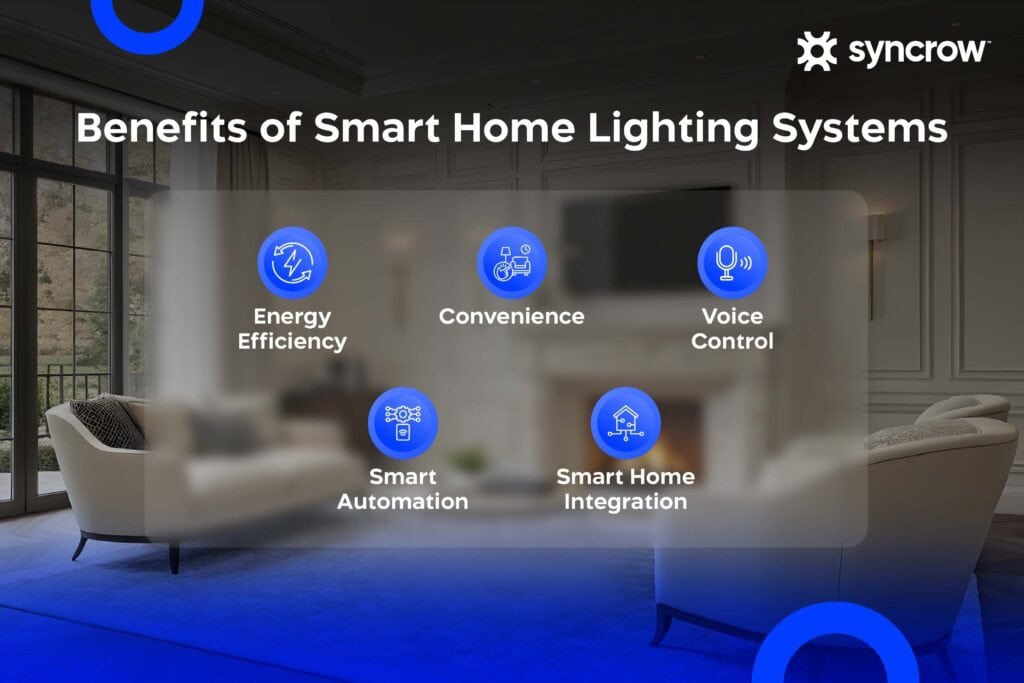
Energy Efficiency
With features like scheduling, dimming, and remote control, smart home lighting ensures lights are only used when needed and reduces energy consumption, leading to lower electricity bills over time.
Convenience
Smart lighting can be easily managed through mobile apps, preset scenes, voice commands, or automated routines, designed to match your lifestyle and usage patterns.
Voice Control
Smart lighting systems connect with popular voice assistants, such as Alexa and Google Home, allowing residents to control lights using simple voice commands and enjoy hands-free lighting throughout the home.
Customization and Automation
This smart lighting feature allows homeowners to create personalized lighting scenes with specific adjustments for different moments of the day. Automation enables lights (and almost any other smart device) to respond automatically to time, motion, or scene activation without the need for manual control.
Safety and Security
Using a motion sensor in automated lighting improves safety by ensuring spaces are properly lit when movements are detected, allowing better sight for residents. Occupants can also turn on lights, including outdoor lighting, to enhance home security when they are away.
Compatibility with Other Smart Systems
Smart lighting works best when integrated with other smart home systems to create a more connected and responsive home environment. This integration could include curtains, AC, security cameras, and sensors.
Professional Recommendations for Better Smart Lighting
Smart lighting brings a wide array of benefits and features. The following expert tips focus on achieving reliable, easy-to-use, and adaptable smart lighting:
- Smart Switch for Full Control: Use smart switches to benefit from more consistent, integrated, and reliable control compared to smart bulbs alone.
- User-Friendly Smart Lighting: Consider a modern smart lighting system with clear interfaces, simple controls, reliable performance, and easy maintenance.
- Scalable Lighting System: Install flexible wireless smart lighting that can easily expand to include additional rooms, devices, and features.
- Professional Installation: Get an expert smart IoT automation solutions company with end-to-end service for advanced features and full benefits.
How to Choose the Best Smart Home Lighting for You?
Choosing the right smart home lighting system depends on lifestyle preferences, home layout, and long-term expectations. Considering these points is vital to get an ideal smart home lighting system:
Define Your Requirements
Start by understanding your home layout and how many rooms need smart lighting. Also consider integration capability with other systems for features like automation, sensors, and scenes.
Set a Clear Budget
Having a clear budget helps narrow down suitable smart lighting options. It also ensures the system is designed based on needs and budget, with a scalability plan.
Consider System Compatibility
It is very necessary to get smart lighting that works smoothly with existing devices and platforms. Compatibility ensures the lighting system can integrate smoothly with existing platforms and future smart home components without technical limitations.
Think Long-Term
Planning for future expansion allows new rooms, devices, or features to be added without major changes. This is highly flexible in a wireless smart home lighting system.
Find a Professional Smart Lighting Company
Professional system design ensures the lighting solution is reliable, scalable, and properly installed without issues related to performance and long-term maintenance.
This is where Syncrow comes in. Founded in 2021, Syncrow specializes in designing and delivering complete smart home automation and lighting systems tailored to your spaces. By focusing on planning, reliability, and long-term flexibility, Syncrow helps you achieve smart lighting that meets today’s and tomorrow’s expectations. Contact us by booking a free consultation today.
FAQs About Smart Home Lighting
How Much Does Smart Lighting Cost?
The cost varies based on space, system type, quality, and features.
Can I Control My Existing Light Fixtures with a Smart Lighting System?
Yes, most smart lighting systems with retrofit capabilities can control existing fixtures without replacing all lights or bulbs.
Is Smart Lighting Secure?
When professionally designed, smart lighting systems use reliable, safe, and secure communication protocols.
How Does Smart Lighting Work?
Smart lighting uses smart switches, controllers, and hubs to manage lighting through apps, automation, or voice control.
What Are the Different Types of Smart Lighting?
The main types of smart lighting are single smart bulbs, wireless smart home automation, and wired smart home automation systems.