Access control has always been a fundamental part of any building. But as technology keeps evolving, traditional access systems are no longer sufficient on their own.
The rise of the smart building has transformed access control from a standalone function into a core component of a broader digital ecosystem. Today, an access control system is expected to do more than unlock doors. It must integrate with other building systems, support operational efficiency, and contribute to a higher level of security without adding friction for occupants.
Modern access control systems are now closely linked to building automation, cloud platforms, and real-time data analytics. This shift reflects a larger change in how building owners and managers think about security, convenience, and long-term scalability. Keep reading to learn more about access control in smart buildings.
What Is Building Access Control?
Building access control refers to the policies, technologies, and systems used to manage physical access within the building. At its core, it defines who is authorized to gain access, which access points they can use, and what access rights they are granted.
Building access control systems typically rely on electronic access control rather than physical keys. Instead of handing out keys that are difficult to track or revoke, organizations issue access credentials such as cards, mobile IDs, or biometric identifiers. These credentials interact with access control readers installed at doors, elevators, gates, or restricted zones.
In a commercial building, access control is essential not only for preventing unauthorized access but also for monitoring access events, enforcing security protocols, and meeting compliance requirements. When connected to a building management system, access control data can support smarter decisions around safety, space utilization, and energy efficiency.
Types of Access Control Systems
Modern building access control systems are available in several forms, each designed to address different access requirements, risk profiles, and user experiences.
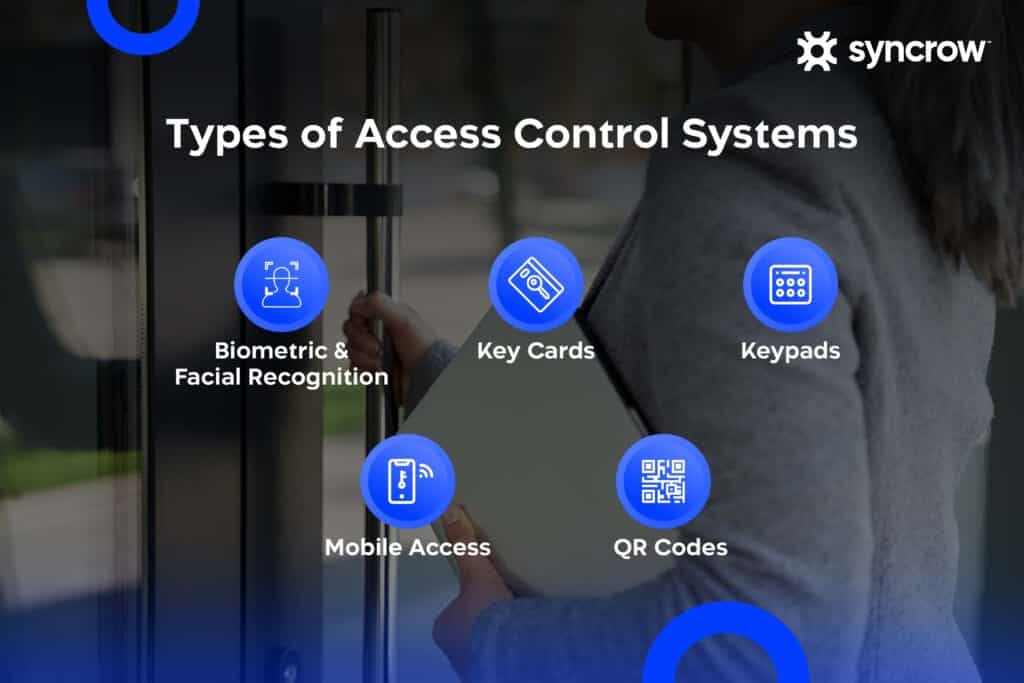
Biometric and Facial Recognition Systems
Biometric systems use unique physical characteristics, such as fingerprints or facial features, to verify identity. These systems offer a strong layer of security because credentials cannot be easily shared, lost, or stolen. In environments with stringent security requirements, biometric access control systems help reduce security breaches and enforce precise access privileges.
Key Card and Key Fob Systems
Key card and key fob systems were an important transition away from mechanical keys, but they are increasingly outdated for modern buildings. They depend on physical access cards that can be lost, shared, or cloned, introducing security risks and ongoing replacement costs.
Managing cards becomes inefficient in large or fast-changing environments, as access updates often require manual intervention and lack real-time intelligence. With limited integration into broader building systems and little adaptability to changing access requirements, key card and fob solutions struggle to meet today’s expectations for flexible, data-driven, and scalable access control.
Keypad Systems
Keypad-based systems rely on PIN codes to grant access. While cost-effective, they are typically used in lower-risk areas or combined with other security measures. On their own, keypad systems can be vulnerable if codes are shared, but they still play a role in layered security strategies.
Mobile Access Systems
Mobile access represents one of the most significant advancements in security. By using smartphones as access credentials, organizations can issue temporary access, revoke permissions instantly, and support remote access management. Mobile systems are increasingly popular in cloud-based access control deployments, especially where flexibility and scalability are priorities.
Core Components of an Access Control System
To understand how access control systems operate, it is important to look at their primary components and how systems like these work together.
Access Control Software
At the center of modern access control systems is the software layer, like an IoT platform. This is where access permissions, role-based access control policies, and access control integration are managed. Increasingly, this software is cloud-based, allowing managers and building owners to monitor access, review access attempts, and analyze access control data from a central control panel.
When access control and building management platforms are connected, the system allows deeper visibility into how people move within the building, supporting both security and operational optimization.
Hardware Devices: From Traditional to Smart
Traditional hardware includes locks, access control readers, and basic controllers. These systems are often limited, operating in isolation from other building technologies.
Smart access control hardware, by contrast, is designed to integrate with other building systems. IoT-enabled readers, smart locks, and sensors can communicate with building automation systems, intercom systems, and even security staff workflows. These modern systems offer greater reliability, real-time monitoring, and the ability to adjust access dynamically.
Smart Access Control by Building Type
Different environments have different security needs, and access control systems must adapt accordingly.
Residential Buildings
In residential settings, access control systems help protect building occupants while maintaining convenience. Residents may use mobile credentials or access cards, while visitors receive temporary access. Smart systems also support audit trails and access events logging, improving overall building security.
Office Buildings
In an office building, access control supports workforce mobility, hybrid work models, and departmental zoning. Role-based access control ensures employees only enter areas relevant to their roles, while managers can easily manage access as teams change.
Healthcare Facilities
Healthcare environments demand different security standards. Access control systems must protect patients, staff, and sensitive areas while allowing rapid movement during emergencies. Integrated access control supports compliance, safety, and operational continuity.
Retail Spaces
Retail access control focuses on protecting inventory, staff-only areas, and back-of-house operations. Systems that track access data can also support loss prevention strategies and internal investigations.
Industrial and Critical Facilities
Industrial sites require controlled access, strict security protocols, and integration with different systems such as surveillance and alarms. Here, access control systems must be resilient, scalable, and aligned with new security and safety requirements.
Can Traditional Buildings Adopt Smart Access Control?
Yes, and increasingly, they must. Many traditional buildings operate with legacy access systems that are siloed and difficult to manage. However, cloud-based systems and modular hardware now make it possible to upgrade without full infrastructure replacement.
By integrating access control with other building systems, older properties can transition toward intelligent building capabilities. This evolution allows building managers to enhance security, improve operational efficiency, and meet modern expectations without sacrificing security.
Choosing the Best Access Control System for a Building
The right access control system depends on building size, risk profile, and long-term goals. However, access control systems are becoming more intelligent, connected, and software-driven.
Smart access control built on smart IoT solutions enables access control integration with building automation systems, security systems, and energy management tools. These systems offer real-time insights, remote management, and adaptability as access requirements evolve.
At the platform level, solutions like SyncOS act as the foundation for integrated access control. By unifying access systems with broader building technology, SyncOS allows building owners and operators to manage access, monitor events, and align security with operational performance from a single platform. This approach reflects the future of building infrastructure: connected, data-driven, and designed to scale.
The Future of Access Control in Smart Buildings
As advancements in security continue, access control systems offer more than protection – they become strategic assets. Systems that allow centralized oversight, real-time analytics, and seamless integration will define the next generation of building control.
The future of building access lies in intelligent systems that support security and convenience, adapt to changing use patterns, and empower managers and building owners with actionable data. This is exactly where SyncOS, our IoT platform, comes in. With a dedicated Access Management module, the platform offers comprehensive features to manage access control to your building, all with a set of smart IoT devices that connect seamlessly. Contact us today for a free consultation.