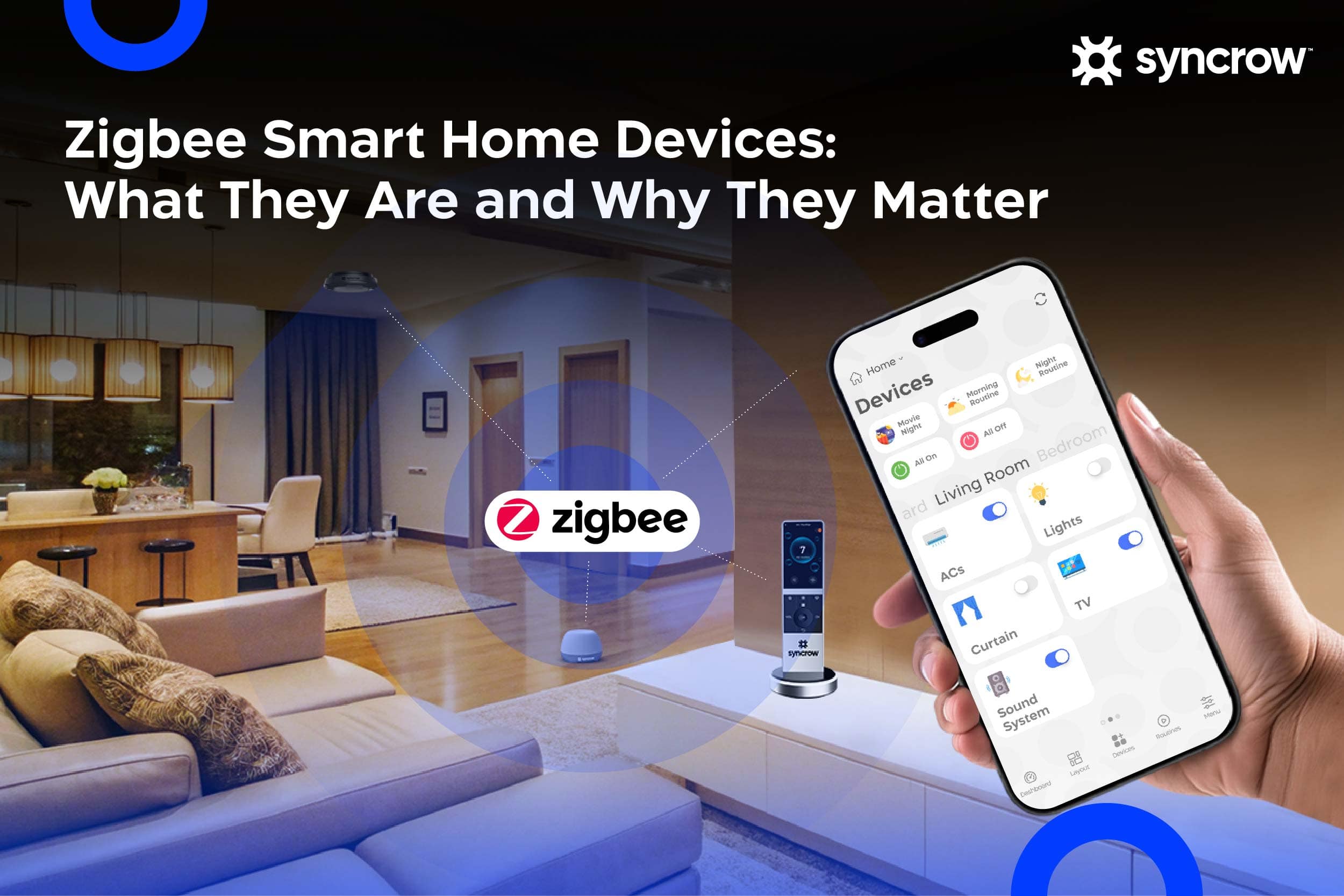
Modern smart homes rely on different smart home automation protocols to connect devices and ensure seamless integration. Among these, Zigbee stands out as an efficient and reliable communication protocol designed for smart environments, allowing devices to communicate without overloading traditional networks.
Zigbee is transforming how smart home systems operate by offering fast response times and consistent communication between devices. It supports real-time automation, reduces connectivity issues, and ensures consistent performance across multiple devices, making it a preferred choice for scalable smart home setups.
This blog explores what Zigbee is, how it works, why it matters, the devices that use it, and how it compares to other protocols in modern smart homes.
What Is Zigbee?
Zigbee is a wireless communication protocol designed for smart devices to connect, communicate, and operate efficiently within a connected network. It is widely used in smart homes to enable seamless automation, efficient device interaction, and consistent performance across connected systems without heavily depending on traditional internet-based communication methods.
Zigbee is compatible with a wide range of smart home devices, allowing them to operate together effectively. This compatibility enhances system efficiency and stability, and ensures smooth communication between different components within a smart home environment.
How the Zigbee Network Works?
Zigbee operates using a mesh network, where devices connect and communicate directly instead of relying on a single central connection. This allows signals to travel through multiple paths, improving reliability, response time, and coverage while maintaining consistent performance even if one connection point fails.
Zigbee devices can be integrated with systems using other protocols through gateways or hubs. This allows smart homes to combine Zigbee, Wi-Fi, and Bluetooth devices into one unified system for better flexibility and control.
Why Do Modern Smart Homes Rely on Zigbee?
The Zigbee protocol plays a critical role in modern smart homes by enabling dependable communication between multiple devices. Its ability to handle large networks without performance issues makes it ideal for complete home automation solutions requiring stability, responsiveness, and efficient energy usage across different connected devices.
As smart homes become more advanced, Zigbee ensures devices operate seamlessly together. It supports automation, reduces delays, and provides a strong foundation for managing lighting, curtains, climate control, security, and other smart home functions seamlessly.
What Defines a Zigbee Smart Home Device?
A Zigbee smart home device is any connected product that uses the Zigbee protocol to communicate within a smart network. These devices are designed to interact seamlessly with other Zigbee-enabled components, supporting automation, centralized control, and efficient operation across the entire smart home system.
An increasing number of smart devices now support Zigbee due to its reliability and efficiency. This growing adoption allows homeowners to benefit from more connected, scalable, and integrated smart home environments with improved overall performance.
What Makes a Device Zigbee?
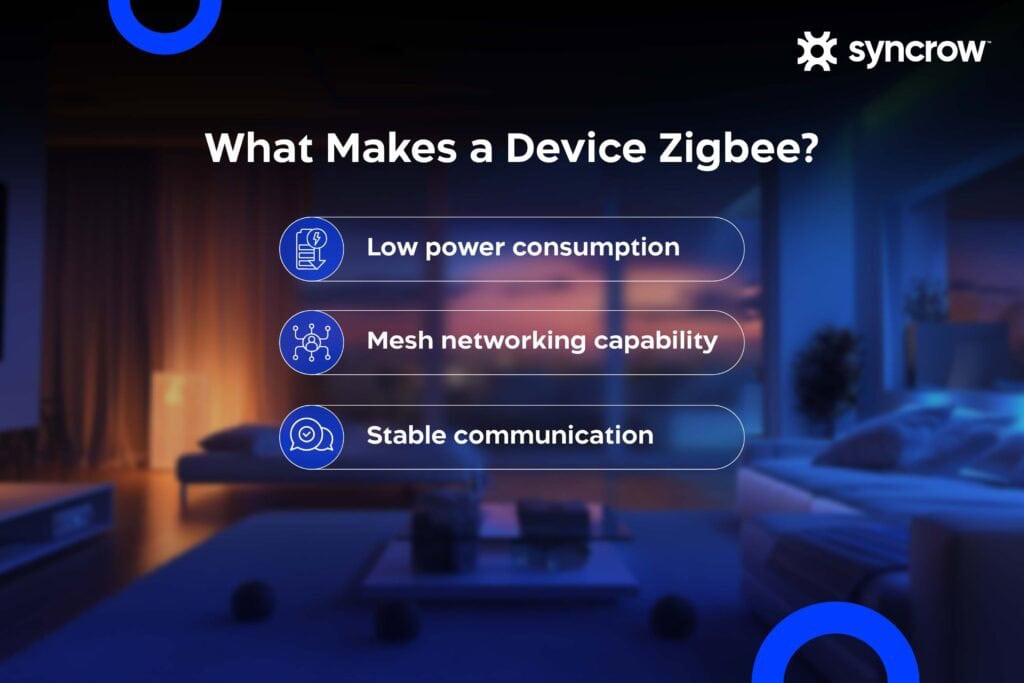
Zigbee devices are defined by features such as low power consumption, mesh networking capability, and reliable communication. These features allow devices to operate efficiently while maintaining consistent connections across a wide network of smart home components.
- Low power consumption
- Mesh networking capability
- Stable communication
Low Power Consumption
Zigbee devices are designed to use minimal energy efficiently, allowing them to operate for long periods on small batteries. This makes them ideal for sensors and always-on devices in smart home environments.
Mesh Networking Capability
In a mesh network, devices communicate directly with each other to extend coverage. This structure improves signal strength, eliminates dead zones, and ensures reliable connectivity across larger spaces.
Stable Communication
Zigbee enables consistent communication between devices by avoiding network congestion and reducing interference. Its dedicated communication approach ensures faster response times and stable performance across connected smart home systems.
Unlike Wi-Fi or Bluetooth devices, Zigbee products are designed for continuous operation within large systems. They provide better scalability, reduced interference, and consistent performance, making them ideal for smart homes with multiple connected devices.
Why Is Zigbee Important in 2026
Zigbee continues to evolve to meet the growing demands of modern smart home solutions. It focuses on energy efficiency, scalability, and reliable communication to meet the increasing need for connected systems supporting many devices without compromising performance, even as systems expand.
As smart home technology advances, Zigbee is expected to keep developing and remain a key protocol. Its compatibility with emerging standards and ability to support complex automation systems position it as a long-term solution for connected living.
10 Top Zigbee Smart Home Devices
Using the right devices and hubs creates a more efficient smart home system that supports different functions in the home, from climate to security and safety, curtains, and lighting. There are key Zigbee devices that, when included in smart home solutions, will improve overall system performance, making it more stable and expandable.
These Zigbee devices form the foundation of a stable and scalable smart home system:
1. Central control screens
2. Smart switches
3. Presence sensors
4. Smart air conditioning thermostats
5. Environmental sensors
6. Water heater smart switches
7. Motion sensors
8. Water leak sensors
9. Gas leak sensors
10. Smart home hubs
1. Central Control Screens
Central control screens act as the main interface for managing smart home systems. Zigbee ensures fast and reliable communication between connected devices, allowing users to control multiple functions, activate scenes, and manage energy usage seamlessly from a single location.
2. Smart Switches
Smart switches control lighting and scenes across the home. With Zigbee, they offer stable connectivity, instant response, and the ability to manage multiple scenes and lighting scenarios without delays or network congestion, regardless of the area space or the number of connected devices.
3. Presence Sensors
Presence sensors detect occupancy and trigger automation. Zigbee enhances their performance by enabling real-time communication and ensuring accurate detection without interruptions, improving energy efficiency and user comfort.
4. Smart Air Conditioning Thermostats
Smart thermostats adjust indoor temperature automatically or based on previously set preferences. Zigbee allows steady communication with HVAC systems, ensuring consistent performance, full control, and energy-efficient climate management across different zones.
5. Environmental Sensors
Environmental sensors monitor temperature, humidity, and air quality. Zigbee sensors enable continuous data transmission with minimal power usage, ensuring accurate readings and dependable automation responses within the smart home system.
6. Water Heater Smart Switches
Smart water heater switches allow remote and automated control. A Zigbee smart switch ensures reliable connectivity, enabling efficient scheduling and reducing energy waste while maintaining reliable operation without overloading the network.
7. Motion Sensors
Motion sensors detect movement for security and automation. A Zigbee motion sensor improves responsiveness and overall performance, ensuring immediate alerts and seamless integration with lighting and security systems.
8. Water Leak Sensors
Water leak sensors detect leaks early to prevent damage. Zigbee enables real-time alerts, data sharing, and reliable communication, supporting quick response and integration with automated safety systems.
9. Gas Leak Sensors
Gas leak sensors enhance safety by detecting hazardous gas levels. Zigbee ensures stable signal transmission, enabling immediate alerts and coordinated responses with other safety devices.
10. Smart Home Hubs
A Zigbee hub connects and manages all devices, allowing it to handle multiple connections efficiently, ensuring consistent communication and centralized control across the entire smart home system.
How Zigbee Smart Home Devices Work Together
Zigbee devices operate within a mesh network, allowing each device to transmit signals to others. This creates a reliable and extendable system where communication remains stable even if one device becomes unavailable.
Professional integration ensures that all devices are properly configured and optimized. A well-designed system enhances performance, reduces connectivity issues, and ensures seamless interaction between all smart home components.
Zigbee vs Wi-Fi vs Bluetooth: Key Differences Explained
Different communication protocols can be applied to smart home automation based on connected devices, system size, and coverage area. Choosing the best protocol should be based on compatibility, stability, response time, and security.
| Feature | Zigbee | Wi-Fi | Bluetooth |
| Compatibility | High (smart devices) | High (internet devices) | Moderate |
| Communication Stability | Very high | Moderate | Low |
| Communication Speed | Moderate | High | Low |
| Devices Support | Large networks | Limited by bandwidth | Limited |
| Alliances | Zigbee Alliance | IEEE | Bluetooth SIG |
| Energy Efficiency | Very high | Low | Moderate |
| Security | Strong | Strong | Moderate |
Zigbee vs Matter: What Is the Difference?
Zigbee and Matter are both designed to improve smart home connectivity, but they serve different roles within the ecosystem. Zigbee is a well-established communication protocol used by many smart devices, while Matter is a newer standard focused on ensuring compatibility between different brands and platforms.
| Feature | Zigbee | Matter |
| Type | Communication protocol | Connectivity standard |
| Main Role | Device-to-device communication | Cross-platform compatibility |
| Network | Mesh network | Works over existing protocols (Wi-Fi, Thread) |
| Maturity | Well-established | Emerging and evolving |
| Device Support | Widely supported | Growing support |
| Focus | Stability and efficiency | Interoperability and simplicity |
Cost and Setup Complexity of Zigbee Smart Home Systems
The cost of a Zigbee smart home system depends on the number and type of devices used. While individual Zigbee devices are generally affordable, the total investment increases as more devices are added to build a complete smart home solution.
In terms of setup, Zigbee systems typically require a hub or gateway to connect and manage devices. Basic setups are relatively simple, while larger systems benefit from professional integration to ensure stable performance and seamless automation.
Over the long term, fully integrated smart home solutions can be more cost-effective. By improving energy efficiency, reducing manual operation, and optimizing system performance, Zigbee-based systems help lower operational costs while supporting scalable and future-ready home automation.
What Do You Need to Set Up a Zigbee Smart Home?
Setting up a Zigbee smart home requires a few essential components to ensure proper communication and system performance. These elements work together to create a reliable and scalable automation environment:
- Zigbee hub.
- Compatible devices.
- System integration.
Zigbee Hub
A Zigbee hub acts as the central controller that connects and manages all devices within the network. It enables communication between devices and allows integration with mobile apps or smart home platforms.
Compatible Devices
Zigbee-compatible devices such as switches, sensors, smart thermostats, and controllers are required to build the system. Choosing compatible devices ensures smooth communication and reliable performance.
System Integration
Proper integration ensures that all devices work together seamlessly. This includes configuring automation rules, connecting devices correctly, and optimizing the system for performance and scalability.
Why Zigbee Is Ideal for Homes in the UAE
Zigbee protocol is flexible, reliable, stable, and expandable, making it ideal for smart home automation. These points align with the requirements of IoT and smart automation in UAE homes.
Large Villas
Large villas and mansions require strong and reliable communication across multiple rooms and floors. Zigbee’s mesh network maintains consistent connectivity without signal drops or performance issues.
Homes with Multiple Smart Devices
Zigbee has a proven ability to handle large networks efficiently. It maintains stable performance even as more devices are added, making it ideal for expanding smart home systems.
High Air Conditioning Usage
Maintaining reliable and continuous system control is essential in smart climate systems. Zigbee provides stable communication for HVAC automation, supporting efficient temperature management without delays or communication interruptions.
Zigbee Smart Home Devices: Key Takeaways
- Supports large networks with multiple connected devices.
- Low power consumption for long-lasting performance.
- Reliable and stable communication across the system.
- Uses mesh networking to extend coverage and reduce dead zones.
- Ideal for scalable and expandable smart home setups.
- Works well with sensors, switches, and automation systems.
- Can integrate with other protocols through hubs or gateways.
Conclusion
Zigbee smart home devices have become a key communication protocol in modern homes, offering reliable connectivity, energy efficiency, and scalability. It supports seamless automation and ensures stable performance across a wide range of connected devices.
Professional integration ensures Zigbee works seamlessly with Wi-Fi and other smart home systems. This is where experienced smart home solution providers like Syncrow deliver real value, combining reliable communication, system compatibility, and scalable automation to create fully integrated smart home experiences in Dubai and Abu Dhabi. Learn more through a free consultation.
FAQs About Zigbee Smart Home Devices
Which Smart Home Brands Support Zigbee?
Many leading smart home brands support Zigbee, including manufacturers of lighting, sensors, thermostats, and control systems. This wide support ensures compatibility and flexibility when building a connected smart home ecosystem.
Do Zigbee Devices Need a Hub?
Most Zigbee devices require a hub or gateway to connect and communicate within the network. The hub acts as a central point, enabling device coordination and integration with other smart home systems.
Is Zigbee Better Than Wi-Fi for Smart Homes?
Zigbee is better suited for smart homes with multiple devices because it offers stable communication, lower power consumption, and better scalability compared to Wi-Fi, which can become overloaded with many connected devices.
Is Zigbee Being Replaced by Matter?
Zigbee is not being replaced but is evolving alongside new standards like Matter. Many Zigbee-based systems are expected to integrate with Matter, ensuring continued relevance and compatibility in future smart home ecosystems.
Can Zigbee and Wi-Fi Devices Work Together?
Yes, Zigbee and Wi-Fi devices can work together through smart home hubs or platforms. This integration allows users to combine different technologies into a single system for better flexibility and control.