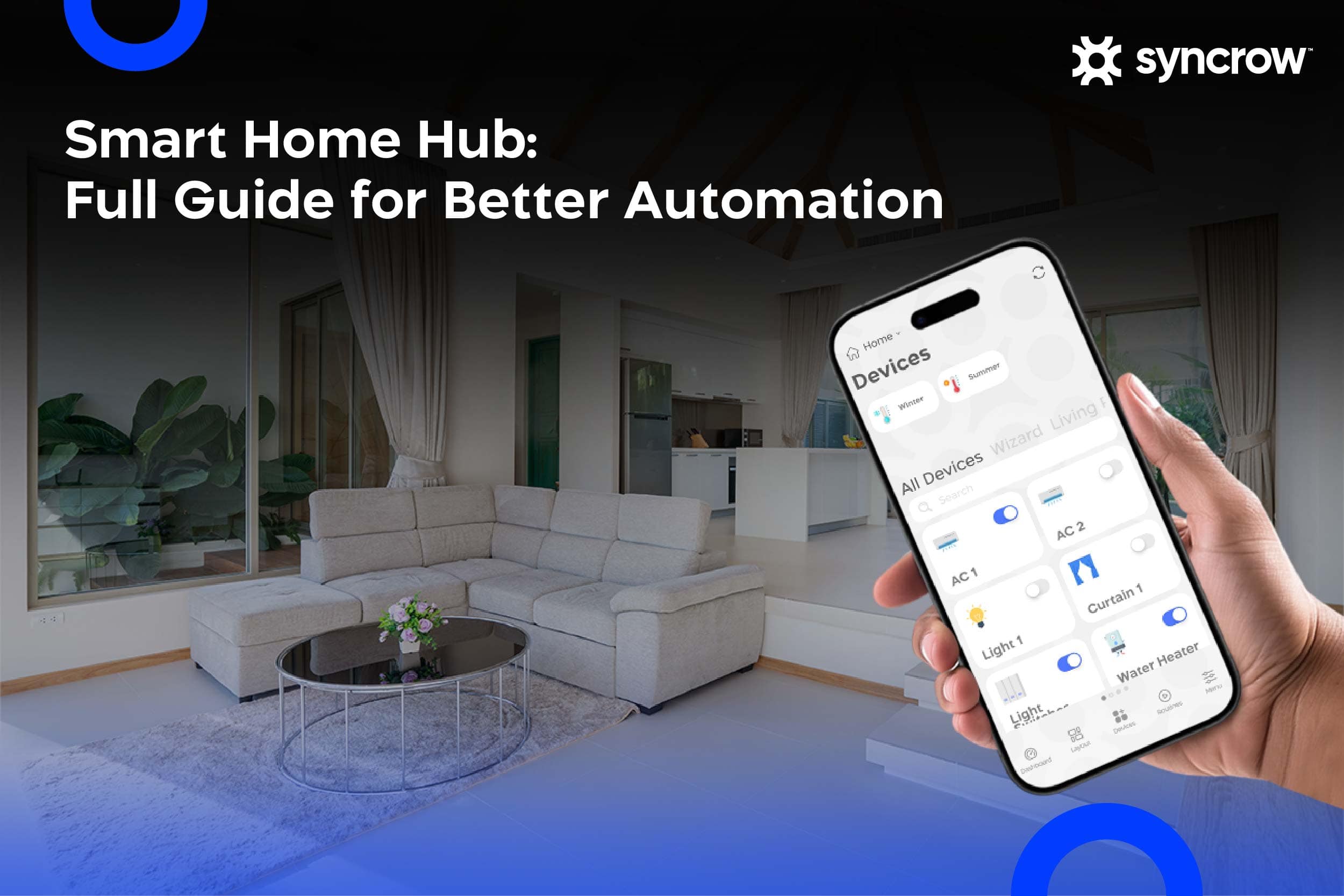
Modern homes are becoming more connected, where lighting, climate, security, and entertainment systems work together to improve daily living. Achieving true efficiency, comfort, and a sense of luxury depends on how well these devices integrate and communicate within one unified system.
A smart home hub plays a central role in this integration. It connects multiple devices, enables communication between technologies, and allows users to control everything from one platform, simplifying the smart home experience.
This guide explores what a smart home hub is, how it works, its benefits, types, and how to choose the right one for a reliable, effective, and scalable home automation system.
What Is a Smart Home Hub?
A smart home hub is a central device that connects, manages, and controls multiple smart home devices within one system. It allows different technologies to communicate, enabling automation, remote access, and seamless interaction between lighting, security, climate, wellness, and other systems.
It supports compatibility with various devices, including those with different communication protocols and brands, such as sensors, switches, cameras, and appliances, allowing them to operate together effectively.
Benefits of Smart Home Hubs
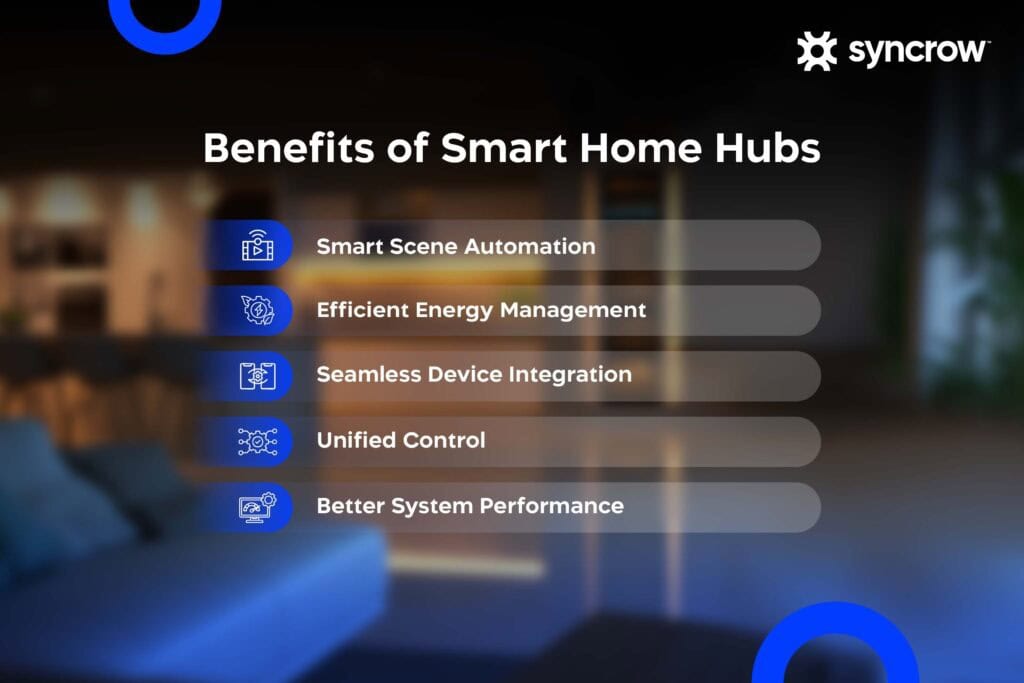
Smart home hubs are essential for system compatibility and efficient operation. They allow communication between devices, which is important for scene activation, voice control, and remote control. The main benefits of smart homes are:
- User-friendly experience.
- Customized scenes.
- Automated actions.
- Energy efficiency.
- Multi-device integration.
- Fewer apps.
- Faster response.
- Better device coordination.
User-Friendly Experience
A smart home hub simplifies control for different users by bringing all connected devices into one central interface. This eliminates the need for multiple apps and allows users to manage their entire home environment easily and more efficiently.
Customized Scenes
Smart hubs enable the creation and activation of personalized scenes that combine multiple actions in one programmed command. For example, lighting, temperature, and curtains can adjust simultaneously to match specific routines or moods.
Automated Actions
Automation allows devices to respond automatically based on specific triggers such as time, motion, or environmental changes. This reduces manual effort and ensures consistent operation throughout the day. The automation benefit is most valuable for working families, especially those with children and elderly members staying alone.
Energy Efficiency
Smart hubs help optimize energy usage by scheduling devices and monitoring consumption. This reduces unnecessary power usage, particularly for stand-by devices, while maintaining comfort, leading to lower energy costs over time.
Multi-Device Integration
A smart hub connects various devices into one ecosystem, ensuring seamless communication. This integration enhances performance and allows systems to work together instead of operating independently, delivering a better smart living experience for residents.
Fewer Apps
Managing multiple smart devices often requires switching between different apps, which can be confusing and time-consuming. A smart home hub brings everything into one platform, simplifying control and improving daily convenience.
Faster Response
Smart devices may respond slowly when controlled separately or through cloud-based systems. A smart home hub improves response speed by processing commands centrally, ensuring faster actions and a smoother automation experience.
Better Device Coordination
Without a central system, smart devices may not work together efficiently. A smart home hub ensures proper coordination between devices, allowing them to interact seamlessly and perform combined actions without delays or conflicts.
How Does a Smart Home Hub Work?
A smart home hub acts as a communication bridge between connected devices. It receives signals from sensors or user inputs, processes them, and sends the needed commands to other devices using wireless protocols like Wi-Fi, Bluetooth, Zigbee, or Z-Wave.
By coordinating devices centrally, smart hubs improve efficiency and reliability. They enable faster responses, better automation, and consistent performance across systems, ensuring all devices work together as a unified smart solution.
Smart Home Hub vs No Hub: Key Differences
Smart home hubs provide clear advantages compared to managing devices individually. By centralizing control and enabling automation, they improve performance, simplify daily use, and ensure better compatibility across different smart home devices and systems.
| Feature | With Smart Home Hub | Without Smart Home Hub |
| Centralized Control | All devices controlled from one platform | Multiple apps needed for each device |
| Automation | Advanced automation with scenes and triggers | Limited or no automation between devices |
| Compatibility | Supports multiple brands and protocols | Devices may not work together |
| Device Coordination | Devices work together seamlessly | Devices operate independently |
| Response Speed | Faster response through centralized processing | Slower response due to separate systems |
| User Experience | Simple, unified, and convenient | Fragmented and less efficient |
Types of Smart Home Hubs
All types of smart home hubs deliver the same concept of connecting devices to ensure better, faster, and more stable communication. The difference between these hubs is the way users interact with them to get the required outcomes. Based on this, smart home hubs can be divided into these main types:
- Base stations.
- Touch screen control panels.
- Voice assistant hubs.
Base Stations
Base stations act as central gateways that connect and manage all smart devices in a home. They handle communication, automation logic, and remote access through mobile applications.
Best used for full-home automation systems requiring stable and scalable control.
Touch Screen Control Panels
Central control screens provide a physical interface to control multiple smart devices from one location. They offer visual control, scene management, mood activation, and quick access to key functions.
Best used in living rooms or entrances for convenient centralized control.
Voice Assistant Hubs
Voice assistant hubs enable hands-free control using voice commands. They integrate with smart devices to perform actions such as turning lights on or adjusting temperature instantly.
Best used for convenience and quick interaction without manual control.
These types differ mainly in how users interact with the system. Base stations focus on backend control, panels provide visual interaction, and voice hubs emphasize ease of use through voice commands.
How to Choose a Home Automation Hub?
Choosing the right smart home hub is necessary for a seamless automation experience and to gain its benefits. Most smart hubs provide similar functions. However, choosing one must rely on these factors:
- Smart hub features.
- Device compatibility.
- Security and data protection.
- Software updates.
Smart Hub Features
A reliable hub should support automation, remote access, multi-device control, multiple communication protocols, and scene customization. Advanced features improve usability and ensure the system can adapt to different needs over time.
Device Compatibility
Compatibility is essential for connecting multiple devices. A good smart hub should support a wide range of brands and technologies to ensure seamless integration across smart home systems, even those with a large number of devices.
Security and Data Protection
Smart hubs communicate data between devices, thus, they should offer strong security features such as encryption and secure access. This protects your home, keeps data safe, and prevents unauthorized access or control of connected devices.
Software Updates
Regular updates ensure the hub remains secure and compatible with new devices. This feature also improves performance and introduces new features, extending the system’s lifespan with a simple update.
Common Wireless Protocols Used in Smart Home Hubs
Smart home hubs use different home automation protocols and can use two or more to manage and communicate devices effectively. Having suitable wireless protocols ensures better compatibility with devices and systems. The most common wireless protocols in smart home hubs are:
- Zigbee protocol
- Wi-Fi protocol
- Z-Wave protocol
- Multi-protocol hubs
Zigbee Protocol
Zigbee is a low-power, reliable communication protocol designed for smart home devices. It supports mesh networking, allowing devices to connect over longer distances with stable performance.
Wi-Fi Protocol
Wi-Fi enables direct internet connectivity for smart devices. It is widely used and easy to set up, but it may consume more power compared to other protocols.
Z-Wave Protocol
Z-Wave is a wireless protocol optimized for home automation. It offers strong reliability, low interference, and efficient communication between devices in a secure network.
Multi-Protocol Hubs
Multi-protocol hubs support multiple communication standards within one device. This ensures greater flexibility, allowing different types of devices to connect and operate seamlessly together.
Where Smart Home Hubs Are Most Useful?
Smart home hubs are most valuable in environments where multiple devices need to work together efficiently. Their ability to centralize control, improve automation, and simplify management makes them suitable for different types of homes across the UAE, depending on size, layout, and lifestyle needs.
- Villas
- Apartments
- Large Homes
- Rental Properties
Conclusion
A smart home hub is a key component in building an efficient and connected home environment. It simplifies control, enhances automation, and ensures that different devices work together seamlessly, improving comfort, security, and energy efficiency.
As a smart home solution provider in Dubai and Abu Dhabi, Syncrow delivers a centralized automation platform designed to connect devices through a unified system. Its solutions focus on scalability, ease of use, and reliable performance for modern living spaces. Choosing the right smart home solution for your home is possible with our free consultation session.
FAQs About Smart Home Hubs
What Is a Zigbee Smart Home Hub?
A Zigbee smart home hub is a device that uses the Zigbee protocol to connect and control compatible smart devices. It enables reliable communication and supports low-power, mesh-based networking systems.
Why Is a Smart Home Hub Important?
A smart home hub is important because it connects different devices into one system. It improves automation, simplifies control, and ensures seamless communication between devices for better efficiency and convenience.
Do I Need a Hub for My Smart Home?
A hub is not always required, but it is essential for advanced automation and integration. It allows multiple devices to work together and provides centralized control for a smoother experience.
What Are the Best Smart Home Hubs in the UAE?
The best smart home hubs are those that offer strong compatibility, reliable performance, and support for multiple protocols. They should also provide automation features, high security, and regular software updates.
Can I Use My Phone as a Smart Home Hub?
A smartphone can control smart devices through apps, but it does not function as a full hub. It cannot fully manage automation and direct communication between different protocols.
Can a Smart Hub Work Without Internet?
Many smart hubs can operate locally without the internet for basic automation. However, remote access, updates, and cloud-based features typically require an active internet connection.