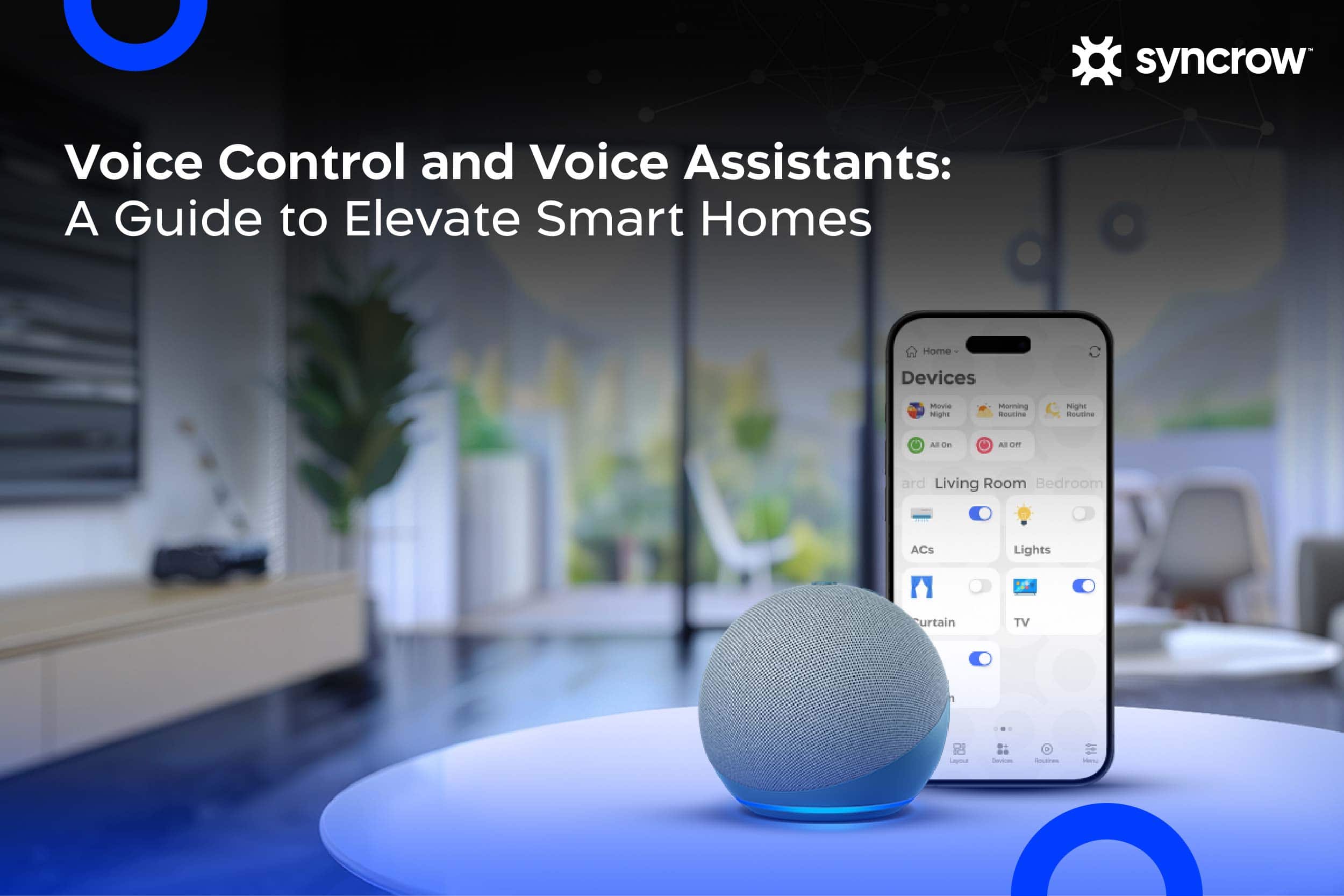
Smart home technology is transforming how people interact with their living spaces through many innovations. Voice control is a key player among these innovations, enabling users to communicate with their homes through simple spoken commands. Voice assistants integrate with smart home platforms and compatible devices, forming a seamless system where multiple technologies work in harmony.
Voice control smart home makes daily living in UAE homes easier by removing the need to operate switches, remotes, or mobile apps manually. With a simple command, residents can adjust lighting, temperature, curtains, or home scenes instantly. This hands-free interaction saves time, helps manage multiple devices at the same time, and makes modern smart homes more intuitive and accessible for everyone.
What Is Voice Control in a Smart Home?
Voice control in a smart home allows users to manage connected devices with spoken commands. Through voice assistants, residents can manage lighting, air conditioning, curtains, security systems, and entertainment devices without touching a switch or mobile app. This creates a more convenient and automated living environment.
In the UAE, voice control is becoming increasingly important to residents of modern villas and apartments with smart home automation. It makes daily routines easier, enhances comfort, and helps residents control multiple devices efficiently.
How Voice Control Works in Smart Home Automation?
Voice control works through communication protocols such as Wi-Fi, Zigbee, or Bluetooth. It connects a voice assistant device to a smart home platform that communicates with compatible and integrated devices. When a user speaks a command, the system processes the request and sends instructions to the right device, allowing lights, thermostats, curtains, and other devices to respond instantly.
What Devices Can You Control with Voice Commands?
Smart home devices can be controlled by voice commands when they are connected to a compatible automation platform and integrated with a suitable voice assistant. These devices communicate through different protocols, so you need to find the right voice assistant for your smart home devices. This allows users to operate different systems in the home using simple voice commands, even activate a scene with different devices at the same time with one spoken command.
- Lighting: Instant ambiance with simple voice commands
- AC thermostats: Precise temperature control for comfort
- Curtains: Automated morning and evening routines
- TVs: Hands-free entertainment control
- Door locks: Enhanced security with voice access
- Cameras: Real-time home monitoring
What Do You Need to Set Up Voice Control in a Smart Home?
Voice control in a smart home requires several core components that allow voice assistants to communicate with connected devices. These elements ensure compatibility, reliable communication, and seamless automation. All these components are basic elements in a professional smart home system.
Voice Assistant Device
A voice assistant, such as Alexa, Siri, or Google Assistant, can listen to voice commands and process requests.
Smart Home Hub
A central controller unit that connects different smart devices and allows them to communicate and respond to the voice assistant device.
Compatible Devices
To get the best out of a voice assistant device and smart home hub, the integrated home devices must support the voice assistant type and communication protocols.
Internet Connection
A stable internet connection is vital for effective voice recognition processing and communication between devices.
Benefits of Voice Control for Smart Homes
Voice control and smart assistants offer key benefits for quality of life and meeting modern lifestyle requirements. A voice assistant in a smart home can boost efficiency, comfort, convenience, and safety. Modern voice assistants support different languages in spoken accents.
Hands-Free Control
Voice control allows you to activate or adjust smart home devices without actually touching switches, remotes, or mobile apps. A simple spoken command can turn lights on, adjust the temperature, or open curtains, making everyday home interactions faster, easier, and more comfortable.
Faster Daily Routines
Voice commands help simplify daily routines by allowing multiple actions at once when activating predefined scenes such as morning or evening modes to control lighting, air conditioning, and entertainment systems, reducing the time needed to manage different devices.
Better Accessibility
Voice control is not only about luxury but also aims to improve accessibility for children, elderly residents, and individuals with limited mobility. Instead of reaching for switches or devices, users can control lighting, climate, wellness solutions, and security systems through simple voice commands, making the home environment easier to navigate for everyone.
Improved Energy Efficiency
Voice control can support energy efficiency by allowing users to easily and quickly manage lighting, cooling systems, and other appliances. Turning devices on or off through simple commands helps reduce unnecessary energy consumption and ensures more watchful use of smart home systems.
Voice Control Benefits at a Glance
- No-touch control of lights, AC, and devices
- Faster daily routines with scene activation
- Improved accessibility for all family members
- Better energy saving and reduced waste
- Enhanced comfort and convenience
Using Voice Commands for Smart Home Scenes
Voice commands for smart home scenes activation are among the most effective uses of the voice control concept. Voice commands allow users to control multiple devices simultaneously with a single phrase. By linking lights, curtains, AC, and climate systems to a scene, residents can simplify routines, save time, enhance comfort, and create the perfect ambiance with a few words.
For example, a “Good Morning” scene can turn on lights, open curtains, and adjust the thermostat with one command. An “Away Mode” scene can switch off lighting, activate security cameras, and lock doors automatically.
Why Voice Control Is Growing in 2026?
Voice control is gaining momentum in 2026 due to major advancements in AI and speech recognition technologies, making interactions more accurate, faster, and context-aware. Modern voice assistants can better understand natural language, different accents, and multiple languages, which is especially relevant in diverse markets like the UAE.
At the same time, the rapid growth of smart home adoption in the UAE is accelerating the demand for seamless, connected living experiences. Residents are increasingly looking for convenience, efficiency, and intuitive control, driving the shift toward hands-free living. Smart home assistants fit naturally into this trend, allowing users to manage lighting, climate, security, and entertainment effortlessly without relying on apps or physical interaction.
Is Voice Control Safe for Smart Homes?
Voice control in smart homes is generally safe, yet people worry about their data privacy, eavesdropping, hacking, and accidental recordings. With proper safety measures, users can confidently manage lights, locks, climate, and entertainment systems.
Ways to Improve Voice Control Safety
- Device authentication: Ensure only trusted devices and users can access and control the smart home system.
- Voice recognition limits: Make sure to restrict actions, especially sensitive ones, to recognized voices, reducing unwanted or unauthorized command risks.
- Secure smart home networks: Setting strong Wi-Fi passwords, updates, and network segmentation helps prevent external access to connected devices.
Best Voice Assistants for Smart Homes in Dubai and the UAE
Many voice assistants can be integrated with different smart home devices and systems. Choosing the right one should depend on your home’s needs and requirements to achieve the desired result. Amazon Alexa, Apple Siri, Google Assistant, and Samsung SmartThings are the most popular options in the UAE market.
| Voice Assistant | Compatibility | Number of Profiles | Device Capacity | Scene Activation | Notes |
| Amazon Alexa | Works with most smart home devices via Wi-Fi, Zigbee, and Alexa-enabled devices | Up to 6 voice profiles | Hundreds of devices | Supports routines and scenes via Alexa app | Ideal for multi-device homes and creating complex automated routines |
| Google Assistant | Compatible with Google Home, Nest devices, and most smart devices | Up to 6 voice profiles | Hundreds of devices | Supports routines and scenes via Google Home app | Great for users already in Google ecosystem with seamless integration |
| Apple Siri | Works with HomeKit-compatible devices only | Up to 5 users per home | Limited to HomeKit devices | Scenes and automations via Home app | Best for iPhone, iPad, and Apple Watch |
| Samsung SmartThings | Integrates with SmartThings-compatible devices, Zigbee, Z-Wave, and Wi-Fi devices | Multiple user profiles through SmartThings app | Dozens to hundreds depending on the hub | Custom scenes via SmartThings app | Offers advanced automation and central hub control for diverse devices |
Conclusion
Voice control is becoming an essential feature in modern smart homes, enabling convenient device management, simplified routines, and improved accessibility. By integrating voice assistants with compatible automation systems, homeowners can create responsive living spaces that adapt quickly to everyday needs.
As smart homes continue evolving, thoughtful integration of voice control plays an important role in creating a seamless experience. Syncrow, a smart home company in Dubai, offers complete solutions with seamless integration of intelligent automation requirements. This includes developing effective systems based on your customized needs. Book your free consultation session to understand all about voice control for homes.
FAQs About Voice Control
Can a Home Assistant Be Controlled by Voice?
Yes, most home assistants support voice control through built-in microphones and voice assistants like Alexa or Google Assistant, letting users manage lights, thermostats, reminders, music, and routines hands-free.
How Do You Voice Control a Smart TV?
You can voice control a smart TV by using the remote’s microphone or a connected assistant device, saying commands to change channels, open apps, search for shows, adjust volume, or power.
What Technology Is Used for Voice-Controlled Smart Home Automation?
Voice-controlled smart homes rely on speech recognition. With natural language processing, cloud computing, and IoT connectivity, these commands will be processed and trigger automated actions across connected devices.
How Do Voice Commands Work in a Smart Home?
Voice commands are captured by microphones, processed with speech recognition, matched with user intent, and then sent to smart home hubs or cloud services that activate devices or routines as needed.
How To Trigger Alexa Scenes?
To trigger Alexa scenes, first create a scene in the smart home app, link it to Alexa, then say a custom command like “turn on movie night mode”.